

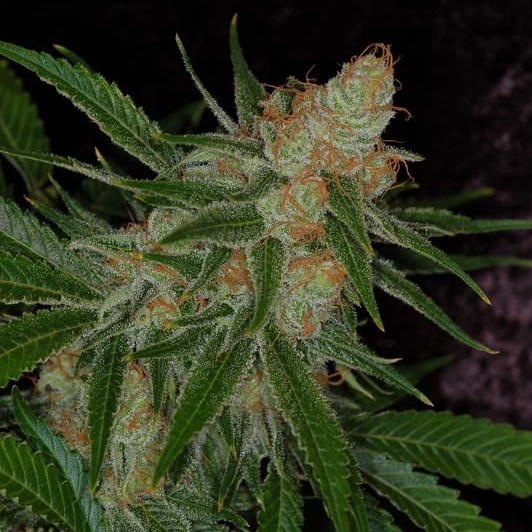
- Strain Type: 80% Sativa / 20% Indica
- Genetics: Apollo 13 × Space Queen
- Breeder: Subcool / TGA Genetics
- THC Content: 18%
- CBD Content: Low
- Terpene Profile: N/A
- Primary Flavors: Mango, lemon, sweet citrus, tropical fruit
- Flowering Time (Indoor): 50–55 days
- Outdoor Harvest Time: October
- Indoor Yield: Medium
- Outdoor Yield: Moderate
- Grow Difficulty: Intermediate
Vortex emerged from Subcool’s effort to capture the qualities of one of his favorite rare cannabis plants in a seed line that could be shared with other growers. Apollo 13—the prized Brothers Grimm hybrid made from Genius × P75—served as the mother, while Space Queen supplied the pollen. Subcool regarded both parents as exceptionally potent and resinous, with similarly strange overripe-fruit aromas, and the cross produced exactly the kind of unconventional marijuana he was seeking. His original description calls Vortex his favorite hybrid and documents an 80/20 sativa-leaning plant that matures remarkably quickly for its energetic personality.
This marijuana strain eventually became one of TGA Genetics’ defining releases. It appeared on a High Times Top 10 list in 2007 and later gained major recognition when Vortex grown by Grean Bicycles took first place in the Sativa category at the inaugural 2010 High Times Medical Cannabis Cup in San Francisco. Contemporary reporting noted that the winning flower had initially been entered under another name before its identity as Subcool’s Vortex was clarified. Its combination of racing cerebral effects, tropical-citrus flavor, heavy resin production, and unusually fast flowering helped turn what began as a personal headstash project into one of the better-known TGA cultivars.
Genetics and Lineage
Apollo 13 occupies the maternal side of the pedigree. Brothers Grimm breeder MrSoul historically identified the original cross as Genius × P75 and noted that only about 500 seeds were produced, helping establish Apollo 13’s reputation as a rare collector’s plant. Genius itself became famous for its intense cerebral character, while the P75 side contributed traits derived from Brothers Grimm’s Cinderella breeding work. Subcool prized Apollo 13 highly enough that one of his explicit goals with Vortex was to preserve Apollo-like qualities through seed rather than relying solely on a treasured cutting.
Space Queen adds another influential branch of North American cannabis breeding. The original Space Queen was created through collaboration involving breeder Vic High and MrSoul by crossing Romulan with Cinderella 99. MrSoul’s modern historical account specifically confirms the Romulan × Cinderella 99 pedigree and notes that Subcool later used Space Queen extensively in his breeding program. Space Queen contributes fruit, resin, hybrid vigor, and a more physically substantial side beneath the faster cerebral qualities associated with Cinderella genetics.
Put together, the extended family tree can be summarized as (Genius × P75) × (Romulan × Cinderella 99). Subcool observed significant phenotype variation, with some females leaning so strongly toward Apollo 13 that experienced smokers had difficulty distinguishing them in blind comparisons. That variability is part of Vortex’s character. Seed-grown plants may differ in height, branching, aroma, and the balance between energetic and physically disorienting effects, but tropical citrus, extreme resin, and a fast finish remain recurring themes.
Effects and Experience
Vortex earns its name through the way the high can rapidly pull attention in several directions at once. Subcool described the effect in unusually strong terms: energizing, heart-racing, confusing, intensely stoned, and capable of leaving experienced consumers substantially more impaired than the plant’s bright sativa classification might suggest. Moderate amounts can initially feel euphoric and mentally expansive, with heightened interest in music, conversation, creative work, games, or anything visually engaging.
The experience does not always remain clean and functional. As the dose rises, mental acceleration can become disorientation, and the Space Queen/Romulan side can introduce enough body weight to make the high feel simultaneously fast and physically strange. That combination separates Vortex from straightforward daytime sativas. It may feel energetic without necessarily improving concentration, and larger amounts can turn an exciting cerebral rush into a confusing, almost psychedelic state.
Original breeder material did not establish a permanent cannabinoid percentage for every plant. Historical examples have tested around the upper teens, but phenotype, environment, harvest maturity, and analytical method can all change the result. Consumers who are sensitive to THC should be cautious because fast-onset cerebral marijuana can produce anxiety, racing thoughts, dizziness, increased heart awareness, or short-term memory impairment when the dose exceeds personal tolerance.
Medical Benefits
The energetic and mood-elevating character has historically made Vortex appealing to some medical marijuana consumers dealing with low mood, fatigue, nausea, or discomfort, but those associations should remain separate from clinical evidence. No controlled trial has established Vortex itself as a treatment for a specific medical condition, and the strain’s intense cerebral effects may be unsuitable for people who are sensitive to THC.
Cannabis and cannabinoid research more generally provides some context. The National Center for Complementary and Integrative Health notes evidence of modest benefit for certain forms of chronic pain, while specific cannabinoid medications have recognized uses for chemotherapy-associated nausea and vomiting and some other conditions. Research on many additional uses remains limited or uncertain. These findings concern cannabis or standardized cannabinoid preparations broadly and cannot be transferred automatically to a particular Vortex phenotype.
Its stimulating side also deserves caution. A cultivar capable of producing rapid mental activity may worsen anxiety or uneasiness in susceptible consumers, especially at higher doses. THC can impair reaction time, memory, judgment, and coordination, and cannabis may cause dizziness or sleepiness as the experience develops. Current laboratory testing and individualized medical guidance are more useful than relying on a strain name when cannabis is being used therapeutically.
Flavor Profile and Aroma
Vortex is remembered as much for its smell as for its potency. Subcool described both parents as carrying a peculiar combination of pungent, overripe fruit and intensely funky aromas. In selected Vortex females, that transformed into a much more inviting combination he compared to mango with lemon, while the flavor reminded him of sweetened lemonade and sour candy. The contrast between unpleasantly fermented raw funk and surprisingly sweet smoke is one of the cultivar’s defining characteristics.
Breaking apart a well-cured flower can reveal ripe mango, lemon peel, tropical fruit, sour sweetness, and a faint pine-like edge beneath the fruit. Some phenotypes lean heavily toward citrus lemonade, while others carry more overripe fruit and musky funk. The Space Queen side is particularly relevant to the tropical character; its Romulan × Cinderella 99 pedigree has long been associated with rich fruit and resin production.
There is no single original breeder terpene panel that should be applied universally to Vortex. Modern batches may test with varying combinations of terpinolene, caryophyllene, limonene, myrcene, and other compounds, but a single contemporary result cannot define the chemistry of every seed-grown phenotype. The historically documented sensory signature remains more dependable: mango, lemon, sweet tropical fruit, sour candy, and a pungent fermented background.
Growing Information
Vortex does not grow like a rigid upright sativa. Subcool described plants as short to medium in height, broad in overall shape, and capable of developing a large number of flowering sites. The branches tend to sag as weight accumulates, making stakes, string, or a screen particularly useful. His preferred approach was to develop a wide bush with many tops rather than allowing a single central stem to dominate. This natural architecture makes the strain well suited to ScrOG-style canopy management where cultivation is legal.
Flowering is remarkably fast for an 80% sativa-leaning hybrid. Subcool’s original guide gives a harvest window around 50–55 days, although later versions of the catalog sometimes extended the recommendation toward 55–60 days. Mature flowers can become heavily coated with resin, and calyxes may swell into unusual foxtailed or dreadlock-like formations. Some plants show weaker stems and more vine-like behavior than others, reflecting the variability of the Apollo 13 × Space Queen population.
Production is respectable but was never the main breeding objective. Subcool characterized yield as medium and documented approximately 3.5 ounces from a 40-inch bush, with another favored female approaching four ounces with relatively modest training. The strain rewards canopy management and structural support more than attempts to force maximum density. Numerous smaller productive sites can outperform a poorly supported central structure, particularly when light reaches the full width of the bush.
Trichome production is one of the cultivar’s stronger horticultural traits. Both parents were selected partly for resin, and Vortex can develop an unusually sticky surface by late bloom. That characteristic made it attractive not only as flower but also to growers interested in resin collection. Dense resinous sites still need good airflow, especially where branches overlap beneath a wide canopy.
Phenotype selection deserves more attention than chasing a particular yield number. Apollo-leaning individuals may offer the sharpest cerebral effect and distinctive sour-fruit character, while Space Queen-heavy plants can bring different structure, fruit expression, and physical weight. Keeping cuttings before flowering allows growers to preserve an exceptional plant once its finished aroma, effects, resin, and architecture can be evaluated.
FAQ
What is the genetics of Vortex?
Vortex is Apollo 13 × Space Queen. Apollo 13 was created from Genius × P75, while Space Queen traces to Romulan × Cinderella 99.
Who bred Vortex?
Subcool created Vortex under TGA Genetics. His 2008 strain guide describes the cultivar as one of his personal favorite hybrids and explains that he created the cross partly to preserve Apollo 13 qualities in seed form.
Did Vortex win a Cannabis Cup?
Yes. Vortex grown by Grean Bicycles won first place in the Sativa category at the first High Times Medical Cannabis Cup in San Francisco in June 2010.
What does Vortex taste like?
The classic profile combines mango, lemon, tropical fruit, sour candy, and sweet lemonade with a strange overripe-fruit funk underneath. Subcool specifically compared the aroma to mango and lemon and the flavor to sweetened lemonade.
How long does Vortex take to flower?
The original breeder guide lists approximately 50–55 days, while later TGA descriptions sometimes allow closer to 55–60 days depending on phenotype and desired maturity.
Final Thoughts on Vortex
Vortex brings together two influential branches of late-1990s North American cannabis breeding. Apollo 13 contributes the rare Genius × P75 combination developed by Brothers Grimm, while Space Queen brings Vic High and MrSoul’s Romulan × Cinderella 99 work into the pedigree. Subcool used those genetics to create a fast-flowering seed line that could capture some of the qualities he valued in his Apollo 13 headstash while adding even more fruit, resin, and structural variation.
The plant itself remains unconventional. Wide branching, sagging limbs, numerous bud sites, medium yields, extreme stickiness, and a roughly 50–55-day finish distinguish it from taller, slower sativa hybrids. Training and support improve results considerably, while careful phenotype selection can uncover plants leaning strongly toward either Apollo 13 or Space Queen.
Flavor may be its easiest characteristic to recognize. Mango and lemon lead into sweet lemonade, sour candy, tropical fruit, and an unusual fermented funk inherited from both parents. The high is equally distinctive—fast, euphoric, energetic, confusing, and capable of becoming surprisingly heavy when the dose increases.
Its 2010 first-place Sativa finish at the High Times Medical Cannabis Cup gave Vortex wider recognition, but the qualities that made it memorable were already present in Subcool’s original breeding notes years earlier: rapid flowering, substantial resin, bizarre tropical aroma, intense psychoactivity, and enough phenotype diversity to make an exceptional keeper genuinely special.


