

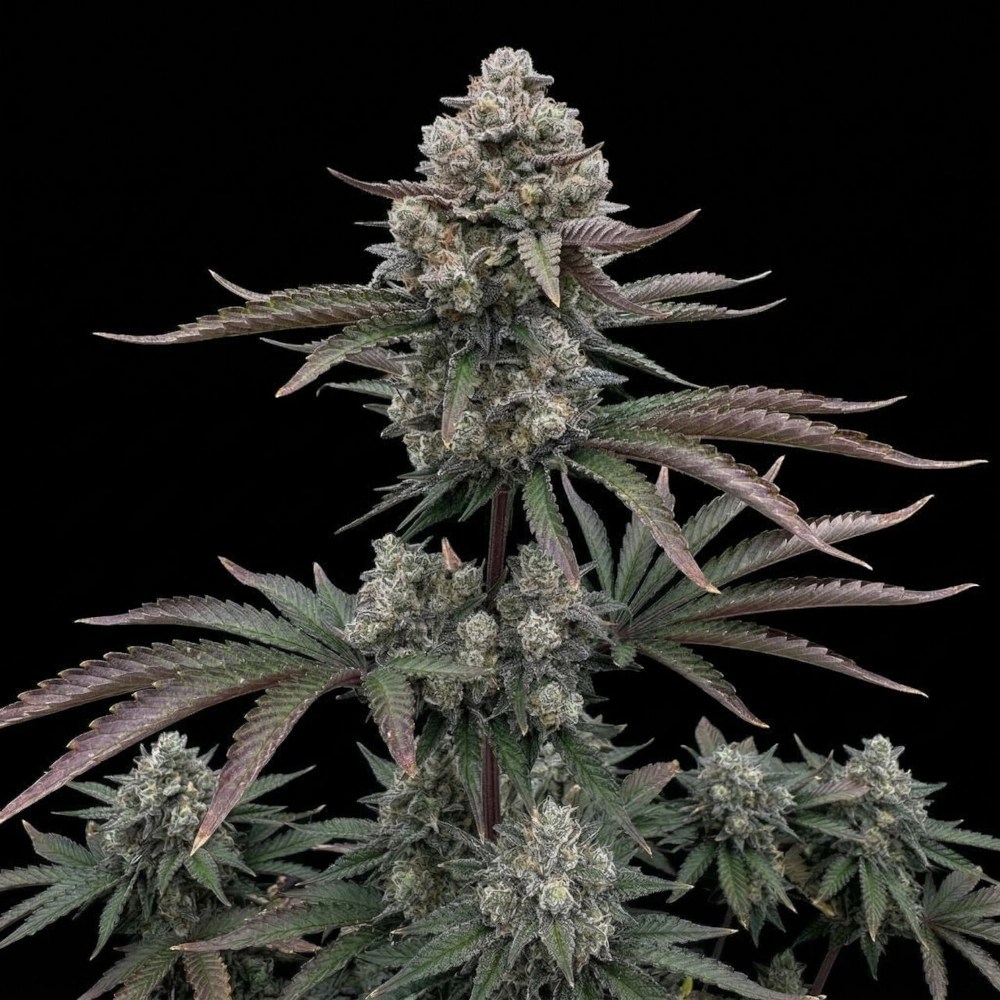
- Strain Type: 70% Indica / 30% Sativa
- Genetics: Northern Lights × Skunk Kush × Jack Herer × Durban
- Breeder: Sensi Seeds
- THC Content: 19%
- CBD Content: N/A
- Terpene Profile: N/A
- Primary Flavors: Citrus candy, sweet fruit, sandalwood
- Flowering Time (Indoor): 10–11 weeks
- Outdoor Harvest Time: early November
- Indoor Yield: high
- Outdoor Yield: high
- Grow Difficulty: Moderate
Critical Runtz is a strange cannabis plant in the best possible way. Its genetic breakdown says 70% indica, yet the moment it begins stretching after the switch to flowering, it can behave more like an ambitious sativa that has forgotten the dimensions of the grow room. Long branches climb toward the light, internodes open, and the canopy expands far beyond what the broad early foliage suggests. Sensi Seeds Research created the strain from four historically important lines—Northern Lights #2, Skunk Kush, Jack Herer, and Durban—building a hybrid around old-school potency, resin, citrus, spice, and unusually strong production rather than using the modern Zkittlez-derived Runtz formula suggested by the name.
The finished flower is equally deceptive. Fresh citrus and candy sweetness make the first impression bright and inviting, but sandalwood, spicy hash, subtle sourness, and deeper cannabis funk gradually emerge underneath. Effects follow the same pattern of changing character: creative cerebral energy appears first, then slowly gives way to a heavier, more physically relaxing stone. In a documented Sensi Seeds grow, one plant reached 128 cm, flowered for 73 days, yielded 118 grams of dried buds, and tested at 18.6% THC. Those figures provide a useful real-world reference for a cultivar better understood through its behavior than through exaggerated specifications.
Genetics and Lineage
Sensi Seeds Research lists Critical Runtz as a four-way combination of Northern Lights #2, Skunk Kush, Jack Herer, and Durban. The breeder does not present the pedigree as a simple modern two-parent formula, so the most accurate description is that all four lines contribute to the finished hybrid. Northern Lights #2 supplies part of the heavy indica foundation. Compared with the more frequently encountered Northern Lights #5, NL #2 represents a less common branch of the family and contributes resin production, physical weight, and the dense flowering tendencies associated with old Afghan-influenced marijuana breeding.
Skunk Kush reinforces the indica side while adding vigor, pungency, and dependable flower production. Jack Herer and Durban pull in the opposite direction. Jack Herer is famous for combining Haze, Skunk, and Northern Lights-related influence into an energetic, resinous hybrid, while Durban brings old-school South African sativa character, brighter terpenes, and a more cerebral effect. Those two lines help explain why Critical Runtz can stretch aggressively and produce such an uplifting beginning despite its 70% indica classification.
Taken together, the pedigree creates a plant that does not behave according to a simple indica-versus-sativa stereotype. Northern Lights #2 and Skunk Kush contribute body, resin, branching strength, and the heavier second half of the experience. Jack Herer and Durban provide height, mental energy, citrus brightness, and a more open growth pattern. The result is a hybrid whose genetics are old-school in origin but whose performance feels unusually dynamic.
Effects and Experience
The first portion of the experience is dominated by mental movement. Creative thoughts can arrive quickly, mood rises, and conversation or music may become noticeably more engaging. Rather than beginning with the thick physical heaviness expected from a 70% indica cultivar, Critical Runtz can feel bright and euphoric at first. That makes the early phase surprisingly compatible with social settings, creative hobbies, or a relaxed evening that has not yet reached the couch.
Physical relaxation develops gradually instead of crashing into the experience all at once. As the initial cerebral energy settles, the body begins to feel heavier and quieter. The transition can be particularly pleasant because the mental uplift does not disappear immediately; for a period, both effects overlap, creating a comfortable middle ground between stimulation and sedation. Eventually, the indica side becomes more obvious, especially after larger servings, and the strain becomes much better suited to movies, music, and winding down.
A breeder-controlled grow produced cured flower testing at 18.6% THC, although that figure should not be interpreted as a guaranteed value for every plant. Phenotype, lighting, environmental conditions, harvest timing, curing, and laboratory methodology can all change cannabinoid concentration. Even at moderate laboratory numbers, the progression can feel substantial because the effects build in stages. Excessive consumption may cause dry mouth, dizziness, mental fog, or temporary anxiety before the heavier body stone becomes established.
Medical Benefits
The shifting effects may be useful to medical cannabis consumers who prefer marijuana that does not begin with immediate sedation. Early cerebral uplift may make everyday stress, low mood, or mental fatigue feel less intrusive, while the creative quality can help maintain interest in quiet activities. For some people, that makes moderate amounts easier to use in the late afternoon or early evening than a cultivar that produces an instant heavy body stone.
Later in the session, the physical side becomes more prominent. General muscular tension and bodily discomfort may become easier to ignore as relaxation deepens, while larger servings can make rest more attractive. Appetite may also increase for some consumers. Because the strain changes so noticeably with time, dose and timing are particularly important. Someone seeking a functional experience may prefer a smaller serving, whereas a heavier dose is more likely to emphasize the indica side.
Sensi Seeds does not publish a standardized CBD percentage or complete terpene laboratory panel for the entire seed line. Medical consumers should therefore use batch-specific cannabinoid and terpene testing whenever available. Personal tolerance, prescription medications, serving size, and previous reactions to cannabis remain more informative than relying solely on the strain name or a single laboratory result.
Flavor Profile and Aroma
Fresh citrus becomes the clearest aromatic note after curing. Lemon and generalized citrus peel rise above a sweeter fruit background, giving the flower a lively first impression. During cultivation, the odor can remain comparatively mild, with fresh floral and fruity notes appearing before the full cured profile develops. That changes substantially after drying, when the citrus becomes sharper and the deeper elements begin to separate.
Sandalwood and spicy hash sit beneath the fruit. These darker notes create an almost incense-like depth that distinguishes Critical Runtz from modern candy strains with simpler sugar-forward profiles. A subtle sour edge adds another layer, while candy sweetness bridges the citrus top notes and the heavier woody finish. The combination is unusual because it can feel bright, resinous, sweet, and traditional at the same time.
Flavor largely follows the aroma. Sweet citrus and candy appear first, followed by a warmer mixture of sandalwood, spice, and mild sourness. Vaporization tends to preserve the bright fruit and floral qualities, while combustion emphasizes the hash-like and woody components. A slow cure is worthwhile because the most interesting part of the profile is not one dominant flavor but the contrast between citrus candy and the deeper old-school resin character.
Growing Information
Critical Runtz is not the compact indica its genetic percentage might imply. Vegetative growth begins with relatively broad foliage and tight internodes, but stretching becomes aggressive once flowering starts. In a documented breeder grow, the plant measured 46 cm before the light cycle was switched and eventually reached 128 cm. Lateral branches stretched almost as vigorously as the main stem, producing a tall, expansive structure that can quickly dominate a small indoor space.
Flowering lasted 73 days in that controlled run, placing the practical bloom period around ten to eleven weeks. The same plant produced 118 grams of dried flower after curing. Sensi Seeds categorizes the strain as an XXL producer, although a universal grams-per-square-meter figure is not published. SCROG, topping, mainlining, and lollipopping can be particularly useful because vertical growth and long lateral branches need to be controlled before they outrun the available space. Branch support may also become necessary as the flowers gain weight.
Outdoor cultivation is possible in temperate and Mediterranean climates, where unrestricted vertical space allows the cultivar to express its natural vigor more freely. Plants should still be given enough seasonal time to complete the relatively long bloom. Mature buds are chunky and olive green with fiery orange stigmas, and some phenotypes can display darker coloration as flowering progresses. Strong airflow, branch support, and sufficient spacing become increasingly important once the plant develops its large flowering structure.
FAQ
What strains make Critical Runtz?
Critical Runtz was created by Sensi Seeds Research using Northern Lights #2, Skunk Kush, Jack Herer, and Durban genetics. Northern Lights #2 and Skunk Kush contribute much of the indica foundation, while Jack Herer and Durban add sativa vigor, flavor, and cerebral effects.
Is Critical Runtz indica or sativa?
The cultivar is approximately 70% indica and 30% sativa. Despite that indica majority, it can grow surprisingly tall and stretchy, while its effects begin with noticeable cerebral energy before becoming physically relaxing.
How much THC does Critical Runtz have?
Sensi Seeds does not publish one universal THC level for every plant. A documented breeder-controlled grow produced cured flower testing at 18.6% THC, though individual plants may test differently depending on phenotype and cultivation conditions.
How long does Critical Runtz take to flower?
A documented Sensi Seeds grow flowered for 73 days, placing the practical indoor flowering period at approximately 10–11 weeks. Growers should expect substantial stretch during the early and middle flowering stages.
What does Critical Runtz taste like?
The flavor combines fresh citrus and candy sweetness with sandalwood, spicy hash, sour fruit, and deeper woody notes. Its profile is more complex and old-school than the name might suggest.
Final Thoughts on Critical Runtz
Critical Runtz is best understood through its contradictions. The plant is 70% indica yet stretches dramatically. Its aroma begins with fresh citrus and candy but finishes with sandalwood and spicy hash. The experience starts creatively and energetically before settling into a distinctly heavier body stone. Those contrasts are not flaws; they are the reason the strain feels different from more predictable modern hybrids.
The genetic foundation is equally distinctive. Northern Lights #2, Skunk Kush, Jack Herer, and Durban represent several separate chapters of cannabis breeding history, combining Afghan-influenced indica structure with Skunk vigor, Haze-related energy, and South African sativa character. Rather than depending on a conventional Runtz pedigree, Sensi Seeds Research used those established lines to build something with a very different identity.
Growers should be prepared for height and a longer flowering period, but the reward can be substantial. A documented 128 cm indoor plant produced 118 grams after 73 flowering days, while the breeder rates overall yield potential as XXL. For consumers, bright citrus candy, sour fruit, sandalwood, hash spice, cerebral euphoria, and a slow-building body stone create a layered experience. Critical Runtz is a weed strain whose name sounds contemporary but whose real character comes from some of the most influential old-school marijuana genetics in the Sensi Seeds collection.


