
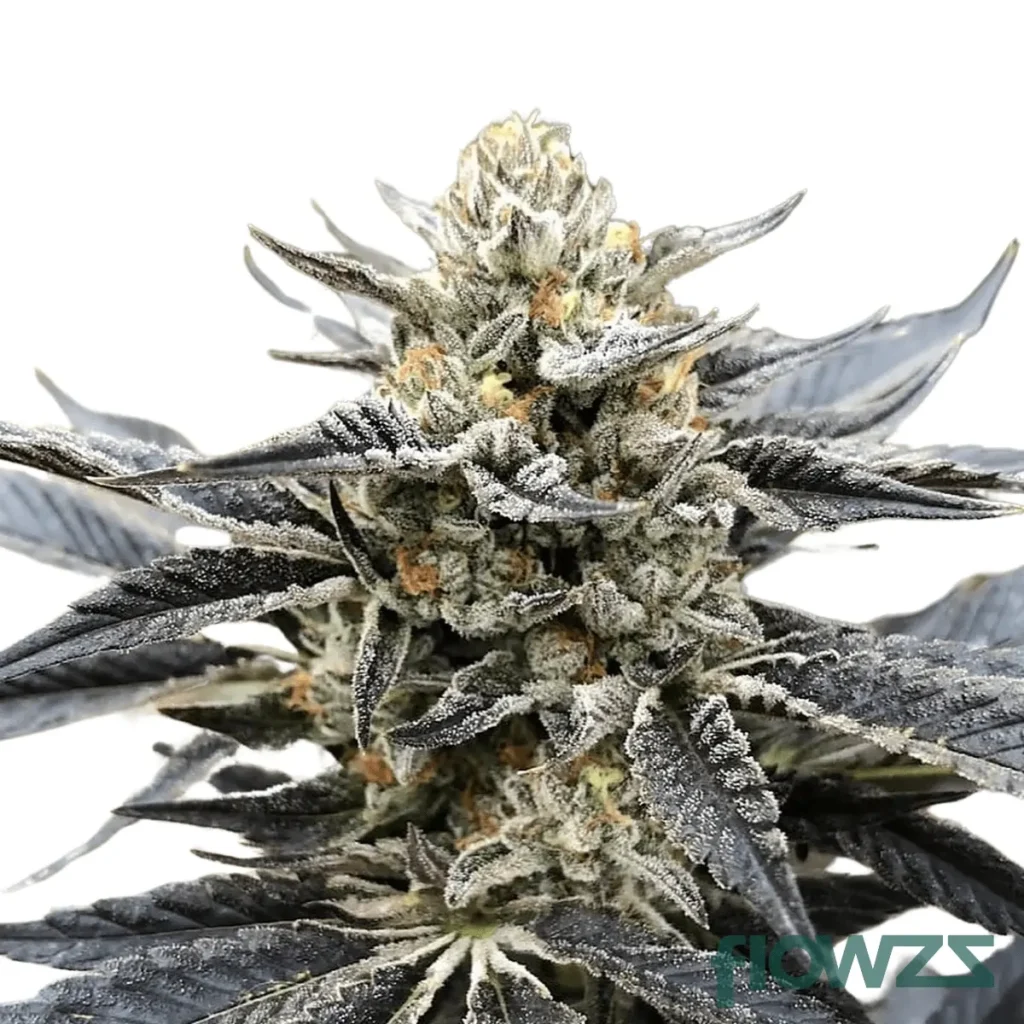
- Strain Type: Indica-leaning hybrid
- Genetics: Chem Dog 91 × Thin Mint GSC
- Breeder: IC Collective
- THC Content: 20–26%
- CBD Content: typically below 1%
- Terpene Profile: Humulene, limonene, myrcene
- Primary Flavors: Diesel, skunk, earth, pine, sweet cookie
- Flowering Time (Indoor): Approximately 8–9 weeks
- Outdoor Harvest Time: Late September to mid-October
- Indoor Yield: 300–450 g/m²
- Outdoor Yield: 400–650 g per plant
- Grow Difficulty: Moderate
Chem Scout sits at the intersection of two eras of American cannabis. One parent represents the raw, fuel-soaked Chemdog genetics that shaped the East Coast marijuana scene; the other comes from the sweet, dense Cookies family that helped define California weed in the following generation. IC Collective brought those worlds together by crossing its Chem Dog 91 with Thin Mint GSC, producing a cultivar that retains the penetrating chemical funk of Chem while adding the compact structure, sweetness, and heavy finish associated with Cookies. It was not merely another Chem-and-Cookies experiment. The strain captured the Indica title at the 2014 NorCal High Times Cannabis Cup and later appeared among High Times’ Top 10 Strains of 2018, helping establish it as one of IC Collective’s signature creations.
Genetics and Lineage
The documented IC Collective version is Chem Dog 91 × Thin Mint GSC. IC Collective describes the cultivar as the product of bringing its own Chem Dog and Thin Mint Girl Scout Cookies cuts together during the early development of the company. The Chem side supplies the unmistakable fuel, earth, chemical sharpness, and forceful potency that made the original Chemdog family legendary. Thin Mint GSC brings a very different set of traits: dense flower formation, sweetness, minty-earthy spice, resin production, and a physical weight that tends to become increasingly apparent as the high develops.
Chem Dog 91 deserves particular attention because its influence extends far beyond this single hybrid. The clone descends from the original Chemdog seed story of the early 1990s and became one of the foundational plants behind numerous diesel, OG, and Chem-related breeding lines. Thin Mint GSC, meanwhile, emerged as one of the better-known selections within the Girl Scout Cookies family. Combining these two plants created a genetic bridge between old-school chemical gas and the richer, sweeter style that became dominant in California cannabis during the 2010s.
There is one potential source of confusion when researching the name. Loud Seeds also documented a Chem Scout project involving Chem 91 and Girl Scout Cookies, created by reversing Chem 91 and pollinating a GSC cut for a feminized seed release planned in 2014. The award-winning strain most commonly associated with the Chem Scout name today, however, is the IC Collective cultivar covered here. IC Collective’s own strain catalog identifies it as its creation and specifies Chem Dog 91 × GSC Thin Mint as the parentage.
Effects and Experience
The opening minutes tend to feel considerably brighter than the strain’s indica reputation suggests. A rapid cerebral change can bring an elevated mood, stronger sensory engagement, and a brief period of focused mental energy. Thoughts may move more freely, conversation becomes easier, and familiar entertainment can feel unusually absorbing. Rather than delivering the immediate heaviness of a traditional nighttime indica, this hybrid initially allows the Chem influence to take control.
That balance changes as the experience develops. Physical relaxation begins building beneath the cerebral lift, often starting as warmth or looseness through the shoulders before spreading into the limbs. The earlier mental momentum becomes less urgent, although it does not always disappear completely. At moderate amounts, the result can be an appealing middle ground for music, movies, gaming, relaxed socializing, or an evening when the consumer wants to remain mentally present without feeling physically restless. IC Collective describes the flower as distinctly laid-back, while its dense Cookies structure and fuely finish reflect both sides of the parentage.
Heavy consumption moves the cultivar into much more traditionally indica territory. The body can become substantially heavier, motivation may decline, and the earlier alertness gives way to a slower, hazier state. Potency deserves respect: IC Collective currently lists average total THC at approximately 23.8%, although individual harvests can vary. Consumers with limited tolerance should begin conservatively. Dry mouth, red eyes, dizziness, and temporary anxious thinking are possible when high-THC marijuana is consumed beyond a comfortable dose.
Medical Benefits
For medical cannabis consumers, Chem Scout’s most useful characteristic may be its changing balance over time. Someone seeking relief from accumulated stress may appreciate the initial mood shift before the heavier body effects arrive. Instead of beginning with immediate drowsiness, the experience can create a window of mental ease followed by steadily deepening relaxation, making the strain particularly compatible with late afternoon or evening use.
Physical tension and everyday aches may feel less prominent once the body component takes hold. The combination of strong THC and a terpene-rich profile may also appeal to consumers who prefer potent flower when winding down after physically demanding work or exercise. Increased appetite can appear during the later stages, while larger servings may become sufficiently heavy to complement a nighttime routine for people who already know they respond well to THC before bed.
These possible benefits should not be mistaken for evidence that this specific cannabis cultivar treats any medical disorder. Effects such as reduced stress, easier relaxation, altered pain perception, or increased appetite vary substantially between individuals. Anyone considering marijuana for persistent pain, anxiety, insomnia, depression, or another health concern should take personal THC sensitivity, medication interactions, and professional medical guidance into account.
Flavor Profile and Aroma
Chem Scout does not hide its heritage behind fruit or dessert sweetness. Open a jar and the first impression is frequently pungent fuel, skunk, damp earth, and a sharp chemical edge. Pine and dry herbs emerge underneath, followed by a subtler sweetness that recalls cookie dough, toasted nuts, or dark sugar rather than candy. IC Collective describes the flower as having dense Cookies structure with a fuely finish, along with both spicy and sweet aromatic characteristics.
The terpene composition is unusually broad. IC Collective identifies humulene, limonene, myrcene, caryophyllene, linalool, bisabolol, and terpineol in its Chem Scout flower, and one Illinois batch reached a reported total terpene concentration of 4.62%. Humulene reinforces dry herbal and woody tones; caryophyllene fits the peppery spice; limonene contributes brighter citrus edges; and myrcene supports the earthy, musky foundation. Smaller amounts of floral linalool and bisabolol can round out what would otherwise be an aggressively industrial aroma.
The flavor becomes slightly softer than the smell. Diesel and earthy skunk tend to dominate the inhale, but a sweeter Cookies note can emerge once the smoke or vapor settles across the palate. Pine, pepper, citrus rind, roasted herbs, and faint mint may appear on the finish. Compared with modern weed bred almost entirely around fruit and candy terpenes, the profile feels distinctly savory and old-school while still carrying enough sweetness to reveal its Thin Mint heritage.
Growing Information
The plant inherits several traits growers would expect from its parentage. Thin Mint influence can encourage dense, compact flowers, while the Chem side contributes vigor and somewhat more open branching. Training during vegetative growth can improve light penetration and encourage multiple flowering tops rather than allowing the plant to concentrate too much production into a central canopy. Low-stress training, topping, and a carefully managed Screen of Green are all reasonable approaches for experienced indoor cultivators.
Flowering time is relatively manageable for Chem genetics. High Times listed the IC Collective cultivar at approximately eight weeks, while broader cultivation references commonly place the finishing window around eight to nine weeks. Buds can become extremely dense, so environmental control matters during the final portion of bloom. Humidity should be kept in check, strong airflow should reach the interior canopy, and excessive late-flower nitrogen should be avoided if the goal is clean-burning, terpene-rich flower.
IC Collective does not publish official breeder yield specifications for this cultivar, making precise numbers estimates rather than guarantees. Roughly 300–450 g/m² indoors is a realistic target under productive conditions, while outdoor plants may reach approximately 400–650 g each when given adequate root space, sunlight, nutrition, and a sufficiently long season. Outdoor harvest typically falls from late September into mid-October depending on climate. The plant is best suited to growers who can manage dense flowers, strong odor, canopy airflow, and a relatively heavy resin load rather than beginners looking for a completely hands-off crop.
FAQ
Is Chem Scout indica or sativa?
Chem Scout is generally regarded as an indica-leaning hybrid, although IC Collective currently emphasizes that cannabis effects are not reliably predicted by simple indica/sativa labels. Its experience often supports that description nevertheless: cerebral and uplifting at first, then progressively calmer and heavier.
What are the genetics of Chem Scout?
The IC Collective cultivar is Chem Dog 91 × Thin Mint GSC. IC Collective confirms the parentage in its current strain catalog.
Who bred Chem Scout?
The award-winning version covered here was created by IC Collective. It won the 2014 NorCal High Times Cannabis Cup Indica category and later appeared on High Times’ Top 10 Strains of 2018 list.
How strong is Chem Scout weed?
Potency commonly falls in the low-to-mid 20% THC range. IC Collective’s current strain page lists average total THC at approximately 23.8%, although actual cannabinoid levels vary between batches.
What does Chem Scout taste like?
Expect an earthy, fuel-heavy mixture of diesel, skunk, pine, herbs, peppery spice, and chemical funk softened by sweeter Cookies notes. The combination is much more savory and gassy than fruity.
Final Thoughts on Chem Scout
Chem Scout succeeds because neither half of its lineage disappears into the other. Chem Dog 91 gives the flower its industrial fuel, skunk, earthy depth, and forceful cerebral entrance, while Thin Mint GSC contributes density, sweetness, resin, and a progressively heavier finish. That contrast helped the cultivar earn major competition recognition and eventually become one of the plants most closely identified with IC Collective.
More than a decade after its Cannabis Cup victory, it still offers something different from the fruit-dominated marijuana genetics filling many modern menus. The aroma is unapologetically pungent, the high changes character noticeably as it develops, and properly cultivated flower can carry an unusually rich terpene load. For consumers who appreciate old-school Chem funk but want the structure and sweetness of Cookies genetics, Chem Scout remains a particularly convincing meeting point between two influential branches of American cannabis.