The seedling stage is one of the most delicate and important phases in cannabis cultivation. After germination, young marijuana plants enter a period of early development where they establish their first true leaves, begin forming a root system, and adapt to their environment. Although seedlings may appear simple and fragile, the conditions provided during this stage have a lasting impact on plant health, structure, and overall yield potential.
Proper seedling care focuses on stability rather than intensity. At this stage, cannabis plants do not need aggressive feeding or strong lighting. Instead, they require gentle conditions that support steady growth without stress. Overwatering, excessive nutrients, or intense light can easily damage seedlings, while balanced care allows them to develop into strong, resilient plants ready for the vegetative stage.
Understanding the Seedling Stage
The seedling stage begins once a germinated cannabis seed emerges above the growing medium and opens its first pair of cotyledons. These small, rounded leaves are responsible for providing initial energy to the plant while it begins developing its first true leaves. Within a few days, the plant starts producing serrated cannabis leaves, signaling that it is transitioning into active growth.
During this stage, the plant is focused primarily on root development and early leaf formation. Although growth above the soil may appear slow at first, significant activity is occurring below the surface as roots expand and establish themselves. A strong root system is essential for future growth, as it determines how efficiently the plant can absorb water and nutrients later in its life cycle.
The seedling stage typically lasts between one and three weeks, depending on environmental conditions and genetics. Providing stable conditions during this time helps ensure that the plant transitions smoothly into the vegetative phase without setbacks.
Lighting for Cannabis Seedlings
Lighting plays a crucial role in seedling development, but it must be carefully balanced to avoid stress. Seedlings require light to begin photosynthesis, yet they are highly sensitive to intensity. Excessively strong lighting can cause leaf burn or stunt growth, while insufficient light can lead to stretching as the plant searches for a stronger light source.
Most growers use a light cycle of eighteen to twenty-four hours of light per day during the seedling stage. This extended light period encourages steady growth while giving the plant ample time to develop. However, the intensity of the light should remain relatively low compared to later stages.
Positioning lights at an appropriate distance from the seedlings helps prevent stress. If seedlings begin stretching excessively, it may indicate that the light is too far away. Conversely, if leaves appear curled or bleached, the light may be too intense. Adjusting light distance and intensity ensures that seedlings receive the right amount of energy without damage.
Watering Seedlings Properly
Watering is one of the most common areas where growers make mistakes during the seedling stage. Because seedlings have small root systems, they require only a limited amount of water. Overwatering can quickly lead to root problems, while underwatering can cause the plant to dry out.
The key to proper watering is maintaining a lightly moist growing medium without saturating it. The soil should feel damp but not soaked. Allowing the top layer of soil to dry slightly between waterings encourages roots to grow deeper in search of moisture, promoting stronger root development.
Using small amounts of water applied near the base of the seedling helps avoid overwhelming the roots. Good drainage is also essential, as excess water should be able to flow away from the root zone easily. Maintaining proper moisture balance creates a stable environment that supports healthy growth.
Temperature and Humidity
Environmental conditions play a major role in seedling health. Cannabis seedlings prefer warm temperatures and moderate humidity levels that support early development. Ideal temperatures typically range between 70°F and 80°F, providing optimal conditions for metabolic activity and growth.
Humidity is equally important during this stage. Seedlings benefit from slightly higher humidity levels, usually between 60% and 70%. Because their root systems are still developing, seedlings rely partially on moisture in the air to maintain hydration. Higher humidity reduces stress and helps prevent the plant from drying out.
However, excessive humidity combined with poor airflow can create conditions that encourage mold or damping-off disease. Maintaining gentle air circulation helps prevent these issues while still preserving a healthy environment for seedlings.
Nutrients and Feeding
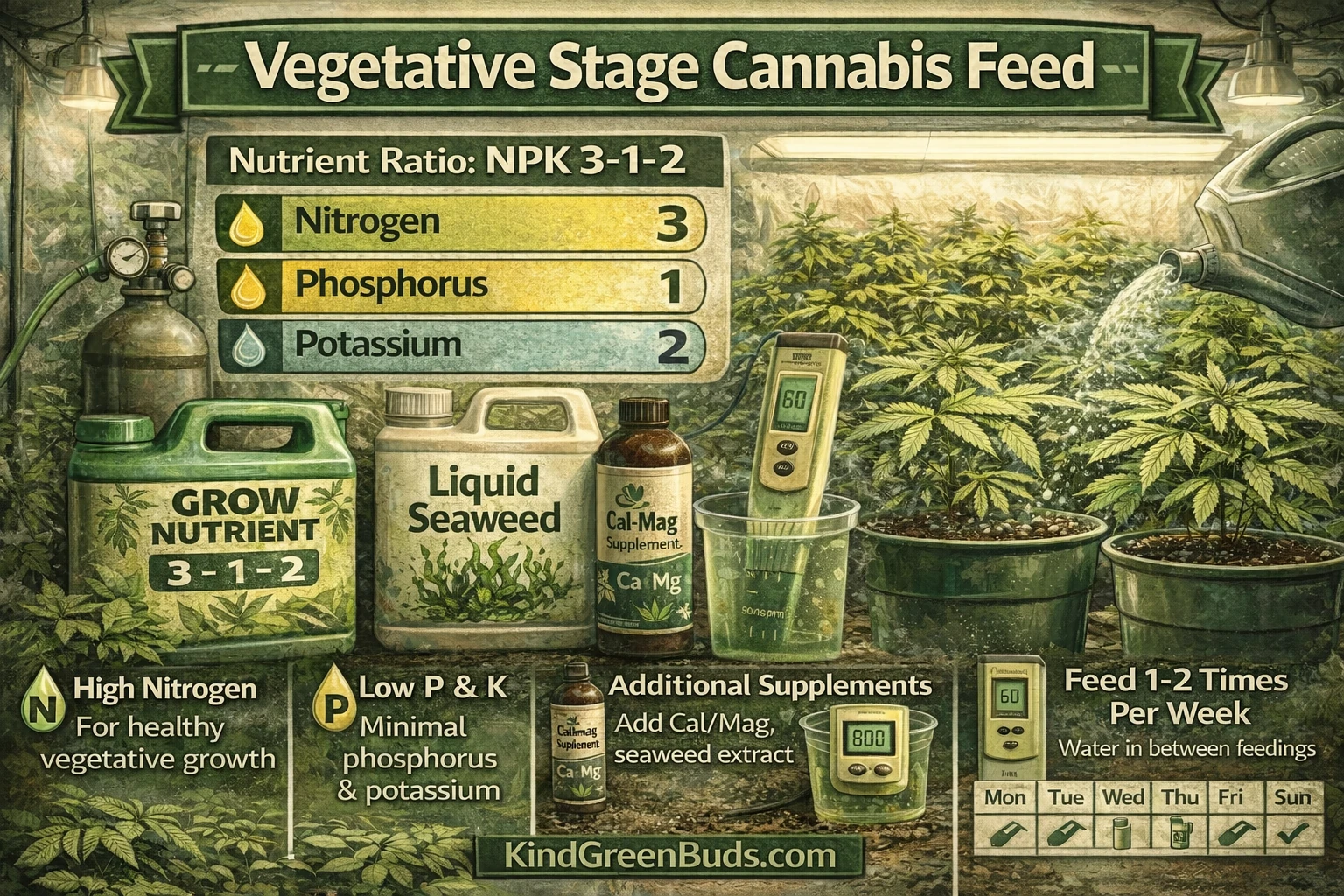
Cannabis seedlings require very little additional nutrition during their early stages of growth. In most cases, high-quality soil contains enough nutrients to support seedlings for the first one to two weeks. Introducing nutrients too early can overwhelm the plant and lead to nutrient burn. If feeding becomes necessary, it should be done cautiously using very mild nutrient solutions at a fraction of the recommended strength.
Seedlings are sensitive to nutrient concentrations, and excessive feeding can damage roots and stunt growth. As the plant begins developing multiple sets of true leaves, nutrient requirements gradually increase. This marks the transition toward the vegetative stage, where more structured feeding schedules can be introduced.
Preventing Common Seedling Problems
Several common issues can affect cannabis seedlings if conditions are not properly managed. One of the most frequent problems is stretching, where the seedling grows tall and thin due to insufficient light. This can result in weak stems that struggle to support the plant as it grows.
Damping-off is another potential issue, caused by fungal pathogens that thrive in overly wet conditions. This disease can cause seedlings to collapse suddenly at the base of the stem. Proper watering practices and good airflow help prevent this problem.
Nutrient burn can also occur if seedlings are exposed to excessive fertilizer too early. Symptoms include yellowing or browning leaf tips and slowed growth. Avoiding strong nutrients during the early stage helps protect the plant from damage. By maintaining stable conditions and observing plant behavior, growers can quickly identify and correct potential issues before they become serious problems.
Transplanting Seedlings
As cannabis seedlings grow, they eventually outgrow their initial containers and require transplanting into larger pots. This process should be done carefully to avoid disturbing the root system. Transplanting is typically recommended once the plant has developed several sets of true leaves and roots begin filling the container.
When transplanting, the seedling should be handled gently, and the root ball should remain intact. Placing the plant into a larger container with fresh growing medium allows roots to expand and continue developing without restriction. Proper transplanting supports continued growth and helps the plant transition smoothly into the vegetative stage, where it will begin rapid expansion.
Final Thoughts on Cannabis Seedling Care
The seedling stage may be short, but its importance cannot be overstated. Providing stable conditions, gentle lighting, proper watering, and minimal nutrients allows cannabis plants to establish strong roots and healthy early growth. These early advantages carry forward into later stages, influencing plant structure, resilience, and final yield.
By focusing on balance and consistency rather than intensity, growers can guide seedlings through this delicate phase with confidence. Healthy seedlings quickly transition into vigorous vegetative plants, setting the stage for a successful cannabis grow from start to finish.