Few things worry growers more than seeing healthy green cannabis leaves begin to turn yellow. Because leaves are the plant’s primary photosynthetic engine, any discoloration can feel like an early warning sign of bigger problems ahead. In reality, yellow leaves can mean several different things. Sometimes it is completely natural. Other times it signals a nutrient imbalance, watering issue, pH problem, light stress, or root dysfunction. The key to solving yellowing leaves is not panic — it is careful observation and understanding how cannabis reallocates nutrients throughout its life cycle.
Cannabis is a fast-growing annual plant with high nutritional demands. When something disrupts nutrient uptake or environmental balance, leaf color is often the first visible indicator. The pattern, location, and speed of yellowing provide important clues. Identifying whether the issue starts at the bottom of the plant, the top, or between leaf veins can dramatically narrow down the cause and guide the correct solution.
When Yellowing Is Completely Normal
Not all yellow leaves indicate a problem. In fact, during late flowering, some yellowing is expected and even desirable. As cannabis approaches harvest, the plant naturally shifts its energy toward bud development and resin production. In doing so, it begins to pull mobile nutrients such as nitrogen from older fan leaves and redirect them to the flowers. This process causes lower leaves to fade from green to pale yellow and eventually drop off.
If yellowing is limited to older leaves near the bottom of the plant during the final weeks before harvest, it is typically part of natural maturation. However, if yellowing begins early in vegetative growth, spreads rapidly, or affects new growth first, it likely indicates an underlying issue that needs attention.
Nitrogen Deficiency
Nitrogen deficiency is one of the most common reasons cannabis leaves turn yellow, especially during the vegetative stage. Nitrogen is essential for chlorophyll production, which gives leaves their rich green color and supports photosynthesis. When nitrogen levels become insufficient, the plant begins reallocating nitrogen from older leaves to support new growth.
This process usually starts at the bottom of the plant. Lower fan leaves gradually fade from green to light green, then to yellow. If left untreated, the yellowing progresses upward. Growth may slow, and overall vigor declines.
Correcting nitrogen deficiency involves adjusting your feeding program with a balanced vegetative nutrient formula. However, it is important not to overcompensate. Excess nitrogen can lead to dark green, clawed leaves and can delay flowering once the plant transitions into bloom. The goal is balance, not saturation.
Overwatering and Root Oxygen Deprivation
Overwatering is another major cause of yellow leaves. Many growers assume drooping leaves indicate thirst, when in fact they may signal the opposite problem. When soil remains constantly wet, roots struggle to access oxygen. Without sufficient oxygen, nutrient uptake declines, and leaves may begin turning pale or yellow.
Overwatered plants often look limp but feel heavy and swollen rather than thin and dry. The soil may stay wet for several days after watering, and growth can stall noticeably. Chronic overwatering can eventually lead to root rot, further impairing nutrient absorption.
Cannabis thrives on a wet-to-dry cycle. Allowing the top layer of soil to dry slightly between waterings promotes deeper root growth and better oxygen exchange. Improving drainage with perlite, using fabric pots, and reducing watering frequency can quickly correct mild overwatering symptoms.
pH Imbalance and Nutrient Lockout
Even when nutrients are present in the growing medium, improper pH can prevent roots from absorbing them. This phenomenon, known as nutrient lockout, often causes yellowing that resembles deficiency despite regular feeding.
In soil, cannabis performs best within a pH range of 6.0 to 7.0. In hydroponic or soilless systems, the ideal range is typically 5.5 to 6.5. When pH drifts outside these ranges, essential nutrients such as nitrogen, magnesium, iron, and calcium become less available.
If yellowing occurs despite consistent feeding, testing runoff pH should be a priority. Correcting pH often resolves the issue quickly, restoring proper nutrient uptake and returning foliage to a healthy green color.
Magnesium and Iron Deficiencies
Magnesium deficiency commonly appears as interveinal chlorosis, where the tissue between veins turns yellow while the veins themselves remain green. This condition usually begins on older leaves because magnesium is a mobile nutrient. If untreated, it can spread upward.
Iron deficiency presents differently. Because iron is immobile, symptoms appear on new growth first. Young leaves may turn pale yellow while older leaves remain green. Identifying whether yellowing starts at the bottom or top of the plant is crucial for accurate diagnosis.
Supplementing with a balanced Cal-Mag product often resolves magnesium-related issues. Iron deficiencies may require adjusting pH or applying a micronutrient supplement.
Light Stress and Heat Damage
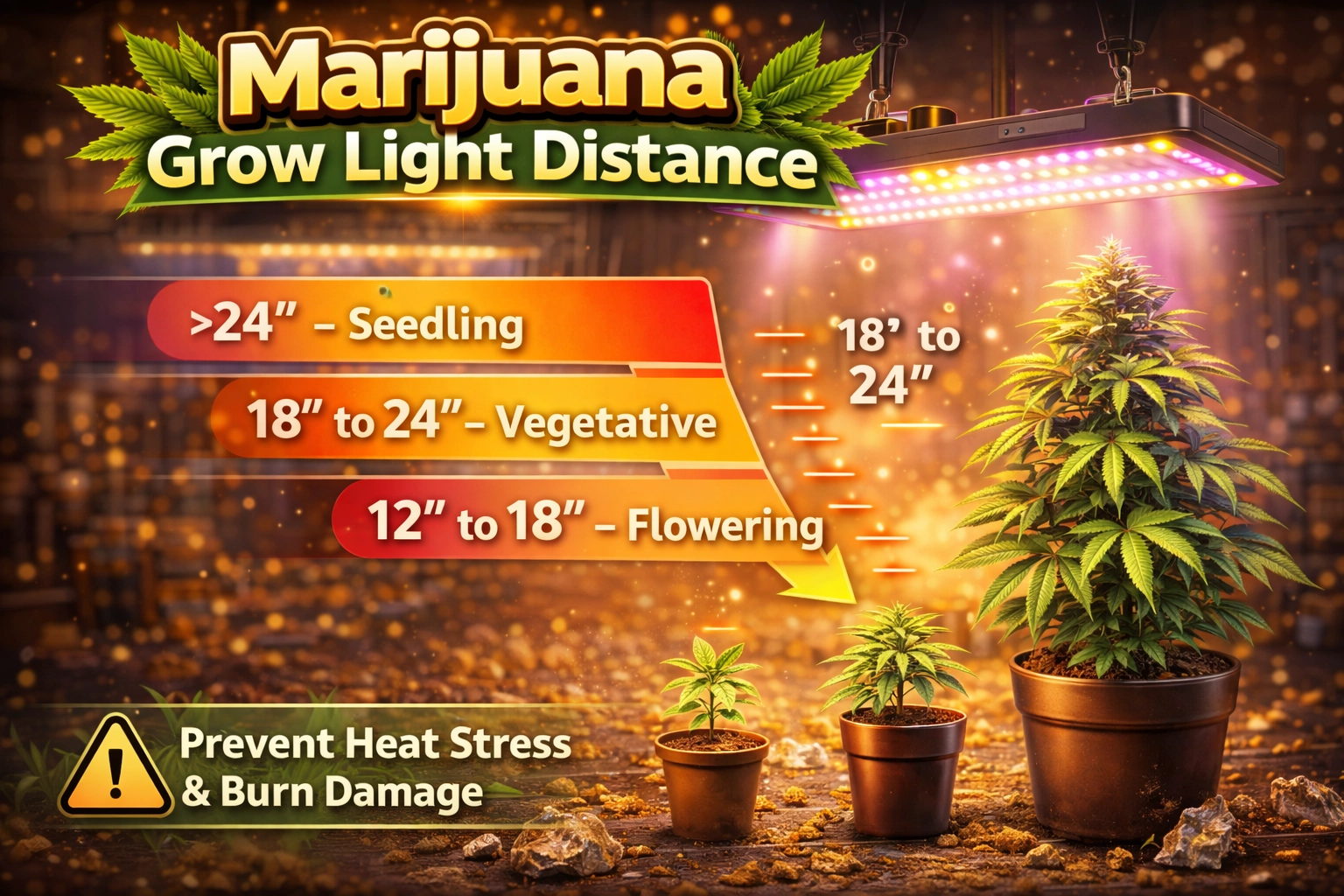
When grow lights are placed too close to the canopy, upper leaves may begin to fade or bleach. Unlike nutrient deficiencies that start at the bottom, light stress typically affects the topmost growth first. Leaves may curl upward in a “taco” shape, and bud tops can appear pale or washed out.
Raising the light slightly and improving airflow usually alleviates the problem. Monitoring canopy temperature is equally important, particularly when using high-intensity LED or HID systems.
Root Health and Soil Problems
Healthy roots are the foundation of healthy foliage. Compacted soil, poor drainage, or fungal pathogens can damage root systems and impair nutrient uptake. When roots struggle, leaves often yellow across the plant rather than in a specific pattern.
Roots should appear white and firm. Brown, mushy, or foul-smelling roots indicate root rot or disease. Improving soil aeration, ensuring proper drainage, and avoiding overwatering are the best preventative measures.
Final Thoughts
Cannabis leaves turning yellow can result from natural aging, nutrient deficiencies, overwatering, pH imbalance, light stress, or root dysfunction. The most effective approach is careful observation. Where does the yellowing begin? Is it affecting older leaves first or new growth? Are other symptoms present, such as drooping, curling, or discoloration between veins?
In most cases, yellowing is reversible once the underlying cause is addressed. Maintaining balanced nutrition, stable pH levels, proper watering habits, and appropriate light distance prevents the majority of leaf discoloration issues. Healthy cannabis plants should maintain vibrant green foliage throughout vegetative growth and early flowering, gradually fading only as they approach harvest.
By diagnosing problems early and responding thoughtfully rather than reactively, growers can protect plant health and preserve both yield and quality.