- Strain Type: Sativa-dominant hybrid
- Genetics: Acapulco × Hawaii 93 × Mango 2001 × KC 36
- Breeder: K.C. Brains Holland
- THC Content: Approximately 18–20%
- CBD Content: Low
- Terpene Profile: myrcene, caryophyllene, and linalool
- Primary Flavors: Mango, fresh fruit, earth, hash, sweet herbs
- Flowering Time (Indoor): 8–10 weeks
- Outdoor Harvest Time: Late September into October
- Indoor Yield: 140 g per plant
- Outdoor Yield: 800–900 g per plant
- Grow Difficulty: Moderate
Brains Damage is a reminder that potent marijuana does not have to rely on modern dessert genetics, exaggerated THC numbers, or an elaborate brand story to be memorable. Developed by veteran Dutch breeder K.C. Brains, this cultivar combines Mexican, Hawaiian, Mango, and KC breeding stock into a plant designed around strong outdoor performance, manageable growth, generous production, and an unusually clear style of intoxication. Its name suggests an overwhelming experience, yet the actual character is more nuanced: fruit and hash dominate the aroma, mental energy remains noticeable through much of the high, and physical relaxation gradually develops without necessarily turning the session into immediate couch-lock.
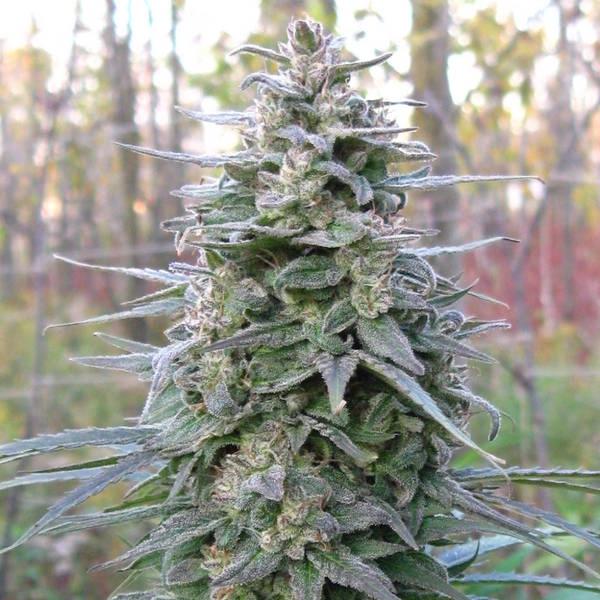
The flowers tend to express an old-school cannabis personality rather than the candy-shop profile common in newer weed. Fresh mango, ripe fruit, earthy resin, and hash-like notes become stronger as the buds mature, with the breeder specifically noting that the aroma intensifies during the second half of flowering. Plants can remain around 90 centimeters indoors yet reach roughly two meters outside, making Brains Damage versatile enough for controlled gardens while preserving the vigor expected from its sativa ancestry.
Genetics and Lineage
The genetic foundation consists of Acapulco × Hawaii 93 × Mango 2001 × KC 36, an unusually broad four-way combination. Acapulco supplies classic Mexican sativa heritage, while Hawaii 93 adds another tropical sativa component. Mango 2001 contributes genetics descending from KC 33 and Afghan stock, giving the family tree both tropical and indica influence, while KC 36 completes the hybrid background.
That mix explains why the plant does not behave like a pure equatorial sativa. Its leaves may be long, narrow, and glossy, but flowering remains relatively short at approximately eight to ten weeks indoors. K.C. Brains selected the cultivar to retain energetic sativa qualities while improving practical garden characteristics such as size, flower-to-leaf ratio, harvest weight, and adaptability. The breeder specifically describes it as suitable for many growing regions and notes strong performance both outdoors and indoors.
Mango 2001 is especially important to the finished aromatic identity. The family contributes sweet tropical fruit alongside the deeper earth and resin inherited from Afghan-influenced genetics. Combined with Acapulco and Hawaiian material, the result is a cultivar whose lineage feels distinctly different from Cookies, Gelato, Runtz, and other contemporary breeding families. Brains Damage belongs to an earlier style of hybridization focused on blending regional cannabis genetics into productive, stable garden plants.
Effects and Experience
The high has a delayed quality that can catch impatient consumers by surprise. Rather than immediately announcing its full strength, the experience may begin with a clean cerebral shift that gradually becomes more obvious. Mental activity can feel brighter and more fluid, while mood rises without the aggressively racy quality associated with some narrow-leaf sativas. K.C. Brains describes the effect as clear, energetic, relaxed, and mellow, with the breeder emphasizing an unusually clear buzz despite the strain’s substantial potency.
As the session progresses, physical relaxation becomes easier to notice. The body may feel quieter while the mind retains enough alertness for music, conversation, outdoor activities, games, or creative hobbies. This balance helps separate Brains Damage from heavier indica marijuana that rapidly pushes toward sedation. Users characterize its effects as cerebrally focused, mellow, and relaxed with an energizing element reflecting the cultivar’s sativa-leaning genetics.
With breeder-listed THC reaching approximately 18–20%, it can still be strong cannabis, particularly for people with limited tolerance. Controlled research shows that cannabis effects become more pronounced as THC exposure rises, including changes in attention, working memory, subjective intoxication, and other cognitive functions. Taking additional inhalations before the delayed effects have fully developed can therefore produce a considerably stronger experience than intended.
Medical Benefits
For medical marijuana consumers, Brains Damage may be appealing when the goal is relaxation without an immediately heavy or sedating mental state. The cultivar’s combination of cerebral uplift and gradual physical calm may suit people who prefer THC-rich cannabis later in the day while still wanting to remain conversational or mentally engaged. Some consumers also choose similar marijuana varieties when dealing with chronic discomfort, stress, appetite changes, or difficulty winding down, although individual response can vary considerably.
Medical evidence should be separated from strain-specific reputation. A 2025 systematic review of cannabis-based products for chronic pain found that cannabinoid preparations with comparable or high THC-to-CBD ratios may provide small improvements in pain, while also increasing common adverse effects. A 2026 Cochrane review focused on chronic neuropathic pain was more cautious, finding substantial uncertainty around meaningful pain relief and noting increased nervous-system adverse effects with some cannabinoid medicines.
Brains Damage itself has not been clinically established as a treatment for pain, insomnia, anxiety, depression, or other medical disorders. Anxiety deserves particular caution with a THC-dominant cultivar. A systematic review of medicinal cannabis and mental-health outcomes found that anxiety-related adverse events became more likely with higher THC doses. Patients using cannabis therapeutically should therefore consider dose, tolerance, other medications, and medical guidance rather than choosing a cultivar solely because its recreational effects sound suitable.
Flavor Profile and Aroma
Fruit is the defining aromatic feature, but it is not the artificial candy sweetness found in many modern hybrids. Brains Damage leans toward ripe mango and fresh tropical fruit, accompanied by earth and a gradually strengthening hash note. K.C. Brains describes the developing flowers as fresh and fruity with a slight hash aroma that becomes increasingly intense during maturation.
Once smoked or vaporized, the tropical sweetness tends to share more space with resinous and earthy flavors. Mango can appear across the front of the palate before giving way to dry herbs, soil, floral undertones, and traditional hash. The contrast makes the strain taste closer to classic Dutch cannabis and landrace-influenced marijuana than to a contemporary fruit-candy cultivar.
A fixed laboratory terpene profile has not been published by K.C. Brains. Cannabis strain databases commonly associate Brains Damage with myrcene, caryophyllene, and linalool, although those rankings should be regarded as batch-dependent rather than permanent characteristics. Phenotype, cultivation conditions, harvest maturity, drying, curing, and storage can substantially change terpene concentrations, making laboratory testing of the specific flower more informative than a generic strain profile.
Growing Information
Brains Damage was developed with outdoor cultivation in mind, though the breeder reports that it performs well indoors in soil, pots, and other controlled setups. Indoor plants typically reach around 90 centimeters, while outdoor specimens may approach two meters. Long, narrow leaves reveal the sativa influence, but the cultivar maintains a favorable flower-to-leaf ratio that prevents excessive foliage from crowding developing buds.
Indoor flowering generally lasts 8–10 weeks, placing the cultivar among the faster-finishing sativa-dominant hybrids. The breeder lists yields of up to approximately 140 grams from indoor plants. Outdoors, much larger specimens can produce approximately 800–900 grams under favorable conditions, with maturity falling around late September into October. That combination of relatively short flowering and substantial outdoor production was one of the primary goals behind the breeding project.
Training can help control vertical development indoors. Topping, low-stress training, or a screen can spread the naturally vigorous branches across the available light footprint, while selective removal of weak lower growth keeps energy directed toward productive flowering sites. Outdoors, sufficient root space allows the cultivar’s natural vigor to become much more apparent. Resin and fruit aroma increase noticeably during the second half of bloom, so maintaining good airflow and avoiding excessive humidity as the flowers mature can help protect the finished crop.
FAQ
Is Brains Damage indica or sativa?
Brains Damage is a sativa-dominant hybrid. K.C. Brains specifically describes the cultivar as sativa dominated, with long, narrow leaves and a clear, energetic quality to the high.
What are the genetics of Brains Damage?
The original K.C. Brains strain combines Acapulco × Hawaii 93 × Mango 2001 × KC 36. Its family tree incorporates Mexican, Hawaiian, Thai, Brazilian, Afghan, and KC breeding influences through those parents.
How strong is Brains Damage?
K.C. Brains lists THC levels as high as approximately 18–20% with low CBD. Actual cannabinoid strength will depend on phenotype, growing conditions, harvest timing, and the individual batch.
What does Brains Damage taste like?
The flavor is centered around fresh mango and sweet fruit, followed by earth, herbs, floral nuances, and a mild hash-like finish. The fruit-and-hash character becomes particularly noticeable as the flowers approach maturity.
How long does Brains Damage take to flower?
Indoor flowering generally requires 8–10 weeks. Outdoors, flowering may run roughly 9–12 weeks, with harvest typically occurring from late September into October depending on climate and phenotype.
Final Thoughts on Brains Damage
Brains Damage offers something increasingly uncommon in modern cannabis catalogs: a sativa-dominant hybrid whose personality comes from classic international genetics rather than recent American dessert strains. Acapulco and Hawaii 93 establish the tropical sativa backbone, while Mango 2001 and KC 36 contribute additional complexity, manageable growth, resin, and productivity. The resulting weed carries fresh mango and fruit across an earthy hash foundation while delivering an effect that can remain surprisingly clear despite THC reaching roughly 18–20%.
Growers gain an adaptable plant capable of finishing in approximately eight to ten weeks indoors while developing into a considerably larger producer outside. Consumers get a distinctive progression: cerebral brightness first, mellow relaxation later, and enough physical calm to keep the stimulating side from becoming excessively sharp. For enthusiasts interested in older Dutch breeding, tropical cannabis genetics, and marijuana that tastes more like fruit, resin, and hash than candy or pastries, Brains Damage remains one of the more unusual cultivars in the K.C. Brains catalog.