
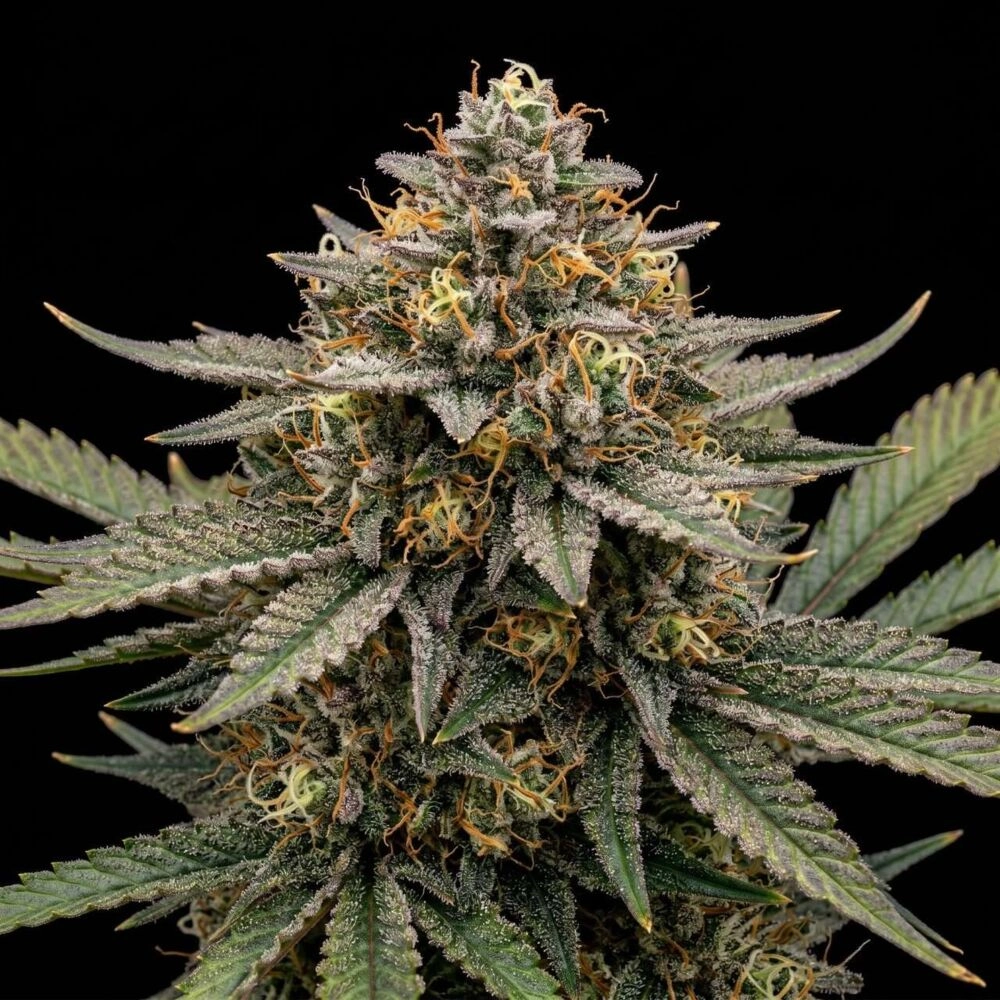
- Strain Type: 85% Indica / 15% Sativa
- Genetics: Afghani × Skunk #1
- Breeder: Expert Seeds
- THC Content: 18%
- CBD Content: Not specified by the breeder
- Terpene Profile: myrcene, pinene, caryophyllene
- Primary Flavors: Sweet fruit, skunk, wood, earth, fresh spice
- Flowering Time (Indoor): 55 days / 8 weeks
- Outdoor Harvest Time: September
- Indoor Yield: 500–550 g/m²
- Outdoor Yield: 900–1,000 g per plant
- Grow Difficulty: Easy to moderate
Afghan Skunk belongs to a generation of marijuana genetics created before candy flavors and exotic strain names became the dominant language of cannabis breeding. Its appeal comes from something more fundamental: strong plants, enormous flowers, abundant resin, unmistakable aroma, and an effect that places most of its weight on physical relaxation. Expert Seeds’ version pairs Afghani with Skunk #1, producing an approximately 85% indica hybrid with the stout character of Afghan cannabis strengthened by the vigor and productivity of classic Skunk genetics. The breeder lists a flowering period of about 55 days, THC around 18%, indoor harvests of 500–550 grams per square meter, and outdoor plants capable of approaching a kilogram under favorable conditions.
The finished weed carries unmistakably old-school character. Sweet fruit and fresh spice sit above a deeper foundation of pungent skunk, wood, earth, and resin, while thick flowers can become heavy enough to require physical support before harvest. Effects follow a similarly balanced path. A modest cerebral lift from the Skunk side accompanies the beginning of the experience, but the Afghani influence eventually takes command, producing a slower, heavier body sensation that makes the cultivar especially comfortable in the afternoon or evening.
Genetics and Lineage
Afghan Skunk is a cross of Afghani × Skunk #1, two genetic families that helped shape generations of modern cannabis. Expert Seeds describes the resulting hybrid as 85% indica and 15% sativa, an appropriate balance considering the substantial Afghan influence in both the immediate parentage and the broader ancestry of Skunk #1. The pairing reinforces qualities growers traditionally value in indica-dominant marijuana—resin production, dense flower formation, manageable height, and a relatively short flowering cycle—while preserving enough Skunk influence to improve vigor, yield, aroma, and the cerebral portion of the high.
Afghani genetics supply much of the plant’s physical character. Plants tend to develop sturdy stems and broad, productive flowering sites, while mature buds become thick and heavily resinous. The influence also comes through in the deeper side of the aroma: earth, wood, spice, and hash-like richness beneath the sweeter top notes. Skunk #1 contributes a different kind of strength. Its hybrid background brings faster growth, substantial branching, oversized flower clusters, and the pungency that gave the Skunk family its name. Expert Seeds specifically emphasizes the unusually strong hybrid vigor created by putting the two together.
The result is less about delicate phenotype hunting and more about dependable performance. Afghan Skunk was built around practical cultivation traits—predictable height, fast flowering, resilience, and large yields—without stripping away the resin and potency associated with its Afghan side. That combination makes it representative of an older breeding philosophy in which the quality of the finished marijuana and the usefulness of the plant in the garden carried equal importance.
Effects and Experience
Afghan Skunk does not usually begin as heavily as its genetic makeup might suggest. The opening portion can include a pleasant mental shift marked by uplifted mood, increased comfort, and a slightly more animated state of mind. Expert Seeds describes the experience as combining a strong indica stone with the more cerebral high inherited from its Skunk ancestry. At moderate doses, that balance can make the first part of the session sociable and easygoing rather than immediately sedating.
Physical relaxation becomes progressively more important as the experience settles in. Arms and legs can begin to feel heavier, muscle tension may become less noticeable, and the urge to remain physically active often declines. Leafly’s aggregated consumer data places sleepy, relaxed, and hungry among the cultivar’s commonly reported effects, which fits well with the strong indica influence. For many consumers, that progression makes the strain a more natural choice after demanding responsibilities are finished rather than before a busy day.
At roughly 18% THC in breeder specifications, Afghan Skunk is potent without automatically entering the extreme THC range occupied by many newer cultivars. Individual flower can still test significantly differently, however, and tolerance remains more important than a strain’s average number. Excessive THC can lead to dry mouth, dry eyes, dizziness, impaired short-term memory, or anxiety in susceptible consumers. Starting with a modest amount makes it easier to experience the transition from gentle cerebral uplift to deeper body relaxation without overwhelming the more enjoyable aspects of the high.
Medical Benefits
The cultivar’s heavy physical finish has made it attractive to medical marijuana consumers seeking cannabis for discomfort, tension, appetite problems, or difficulty relaxing before sleep. Its combination of mental uplift and later sedation may be especially appealing when physical symptoms are accompanied by restlessness or a low mood. Consumer-generated strain data also frequently associates Afghan Skunk with relaxation and sleepiness, although individual experiences are not equivalent to clinical evidence.
Research on cannabinoids for chronic pain provides a more useful framework for understanding these potential uses. A 2025 review concluded that cannabinoids may offer pain-relieving benefits in some chronic pain conditions while emphasizing important limitations in the evidence as well as risks including psychiatric effects, dependence, and drug interactions. Sleep research is similarly cautious: a systematic review of randomized trials found that medical cannabis and cannabinoids may improve impaired sleep among people with chronic pain, but the average benefit was relatively small.
Those findings apply to cannabis-based treatments broadly rather than Afghan Skunk specifically. Likewise, a weed strain that feels calming should not automatically be considered a treatment for anxiety. Cannabis can produce both anxiety-reducing and anxiety-provoking responses depending on THC dose, individual susceptibility, previous exposure, and other factors. People using cannabis for a diagnosed medical condition should discuss it with an appropriate healthcare professional, particularly when prescription medications or significant mental-health symptoms are involved.
Flavor Profile and Aroma
Afghan Skunk offers an aroma that feels unmistakably different from many modern dessert weed strains. Sweetness is present, but it shares the foreground with pungent skunk and a dry woody quality. Breaking apart the flower can reveal fresh spice, damp earth, resin, and a sharper almost ammonia-like edge beneath the fruit. Expert Seeds describes the taste as sweet and fruity with fresh spicy notes, while other listings of the same genetics emphasize skunk, wood, and ammonia in the aroma.
On the palate, the sweeter characteristics usually become clearer. Fruit appears early on the inhale before the flavor turns more earthy and herbal, leaving wood and spice behind after the exhale. A proper cure can make a considerable difference: preserving volatile aromatic compounds allows the sweet and spicy layers to remain distinguishable instead of leaving only a blunt skunky odor.
Available strain data commonly places myrcene as the dominant terpene, followed by pinene and caryophyllene. That combination corresponds naturally with the cultivar’s herbal, woody, peppery, and earthy character, but terpene rankings are not guaranteed from one crop to another. Phenotype, cultivation environment, maturity at harvest, drying, curing, and storage all influence the chemical profile of finished cannabis, so batch-specific laboratory testing remains the best source for exact terpene concentrations.
Growing Information
Productivity is one of Afghan Skunk’s strongest attributes. Expert Seeds lists an indoor flowering period of approximately 55 days, with typical yields around 500–550 g/m². Outdoors, properly developed plants may reach approximately 900–1,000 grams per plant and are generally ready during September in the Northern Hemisphere. The cultivar grows vigorously but remains predictable enough in height to suit indoor rooms where vertical space is limited.
Flower weight becomes the main structural challenge. Although the stems can be thick, mature bud clusters may become sufficiently heavy to bend or even break unsupported branches. Stakes, trellis netting, or another support system should therefore be installed before late flowering makes the canopy difficult to manipulate. The same dense flower structure makes airflow important. Good circulation through the canopy and sensible humidity management become increasingly valuable as flowers swell and moisture has fewer opportunities to escape from their interiors.
The plant’s manageable growth pattern makes it a reasonable choice for newer cultivators, while its yield potential leaves enough upside for experienced growers to optimize. It can be kept relatively compact when flowering begins from small clones, or allowed a longer vegetative period when larger plants are desired. Outdoors, sufficient sun and adequate root space allow its natural vigor to become more apparent. Resin production is another notable strength, giving mature flowers a heavy trichome covering and making well-grown material attractive for traditional hash or other forms of resin collection.
FAQ
Is Afghan Skunk indica or sativa?
Afghan Skunk is an indica-dominant hybrid, with Expert Seeds listing the genetic balance at approximately 85% indica and 15% sativa. Its high generally combines a modest cerebral component with much stronger physical relaxation as the experience develops.
What are the genetics of Afghan Skunk?
Expert Seeds’ Afghan Skunk is bred from Afghani × Skunk #1. The Afghani parent contributes dense resinous flowers and a heavier physical character, while Skunk #1 strengthens vigor, productivity, pungency, and the mentally uplifting side of the experience.
How strong is Afghan Skunk?
Expert Seeds lists approximately 18% THC for the cultivar. Actual cannabinoid content can differ substantially between harvests, so laboratory results for the specific batch provide a more useful measure of potency.
What does Afghan Skunk taste like?
Expect sweet fruit followed by fresh spice, wood, earth, and strong skunky undertones. The combination is more pungent and traditionally cannabis-like than the candy and pastry flavors found in many contemporary strains.
How long does Afghan Skunk take to flower?
Indoor flowering takes approximately 55 days, or about eight weeks. The breeder lists September as the outdoor harvest period in the Northern Hemisphere. Indoor yields can reach roughly 500–550 g/m², while well-developed outdoor plants may produce 900–1,000 grams each.
Final Thoughts on Afghan Skunk
Afghan Skunk has endured because its strongest qualities are useful rather than fashionable. The Afghani and Skunk #1 pairing creates dense flowers, heavy resin production, vigorous growth, pungent aroma, a short flowering period, and the potential for unusually large harvests. Its flavor preserves plenty of sweetness but remains grounded in wood, spice, earth, and unmistakable old-school skunk, giving the cultivar an identity that stands apart from modern fruit-candy hybrids.
The experience follows the same philosophy. A touch of Skunk-derived cerebral lift keeps the opening from feeling flat, while the dominant Afghan side gradually produces the heavier body relaxation that defines the strain. With approximately eight weeks of flowering, yields reaching 500–550 g/m² indoors, and the potential for exceptionally large outdoor plants, this hybrid offers meaningful value to growers as well as consumers. For anyone interested in classic marijuana genetics, Afghan Skunk remains a strong example of how two foundational cannabis families can be combined without losing the character that made either one important in the first place.