
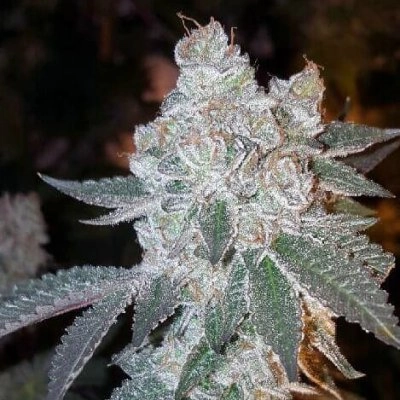
- Strain Type: Indica-leaning hybrid
- Genetics: Girl Scout Cookies Forum Cut × Snow Lotus
- Breeder: Bodhi Seeds
- THC Content: mid-to-upper 20% range
- CBD Content: Typically low, generally below 1%
- Terpene Profile: Caryophyllene, limonene, humulene
- Primary Flavors: Sweet cookie dough, vanilla, berry
- Flowering Time (Indoor): 9–11 weeks
- Outdoor Harvest Time: Early to mid-October
- Indoor Yield: 400–550 g/m²
- Outdoor Yield: 500–700 g per plant
- Grow Difficulty: Moderate
Space Cake arrived during a period when elite Cookies genetics were being crossed in nearly every imaginable direction, yet Bodhi Seeds approached the project differently from breeders interested only in making Girl Scout Cookies heavier or sweeter. By pairing the celebrated GSC Forum Cut with Snow Lotus, Bodhi created a marijuana hybrid that preserves the creamy, resinous character of Cookies while opening the plant into something more vigorous, spacious, and mentally buoyant.
The breeder’s Space Cake lineage is specifically documented as Forum Cookies × Snow Lotus, distinguishing it from unrelated products that have subsequently borrowed the name. Dense frost, pastry-like sweetness, berries, nuts, herbs, and underlying gas give the flower considerable aromatic range, while the high typically begins well above the shoulders before gradually settling into a much deeper physical state. Space Cake may sound like another novelty dessert weed, but its enduring appeal comes from thoughtful breeding rather than the name.
Genetics and Lineage
The authentic Bodhi Seeds version combines the Girl Scout Cookies Forum Cut with Snow Lotus. The Forum Cut is one of the historically important selections from the original Girl Scout Cookies family, prized for compact resinous flowers, strong potency, sweet dough, earth, Kush-like gas, and a distinctive aromatic richness. Snow Lotus was one of Bodhi’s important breeding tools and brought an entirely different set of qualities into the project, helping create offspring with greater vigor and a more expansive structure than the compact Cookies mother. Bodhi-associated source material continues to document Space Cake explicitly as Forum Cookies × Snow Lotus.
That pairing is important because it prevents the finished cultivar from becoming simply another dense Cookies remake. The mother provides the pastry-like foundation, but seed-grown plants can move toward fruit, spice, herbs, citrus, and earth as the Snow Lotus side becomes more apparent. The result is a broader aromatic spectrum and a plant that often carries its flowers on a somewhat larger frame than growers might expect from pure Cookies genetics. Resin remains a central feature: mature buds can develop a heavily frosted surface that gives the flowers an almost powdered appearance under bright light.
Variation should be expected because the original release was developed as regular photoperiod seed rather than as a single standardized clone. Some selections remain compact and Cookies-heavy, producing creamy vanilla, dough, and stronger physical effects. Others stretch more, show brighter fruit and herbal notes, and preserve greater mental energy during the first half of the experience. This phenotype range is part of what made Bodhi genetics attractive to growers interested in hunting exceptional individual plants instead of simply reproducing one commercial expression.
Effects and Experience
Space Cake does not typically announce its indica side first. The opening portion often feels mentally expansive, with a noticeable elevation in mood and a curious, slightly floaty quality that suits the name surprisingly well. Attention may wander toward music, conversation, visual entertainment, or creative thought, and the experience can feel sociable before any serious bodily heaviness develops. A licensed cultivator producing the Bodhi-derived version similarly describes an initial cerebral lift followed by full-body relaxation, which fits the contrast built into the parentage.
Give the effects time and the tone changes. The mental lift becomes less urgent as warmth and weight begin spreading through the body. Muscles loosen, physical activity becomes less appealing, and the earlier creative headspace can gradually transform into dreamy detachment. At moderate doses, this progression works well for movies, gaming, music, quiet social situations, or an evening when there is nothing demanding left on the schedule. Larger quantities are considerably less functional and may push the experience toward couch-lock or sleepiness.
Strength varies by cultivator, and the original Bodhi release was not attached to a universal THC percentage. Modern licensed examples demonstrate how potent the genetics can become under contemporary production, with one current commercial Space Cake line listing approximately 250–310 mg/g THC, equivalent to roughly 25–31%. That does not mean every batch will test that high. Consumers should rely on the laboratory label attached to the actual flower and approach strong examples conservatively, especially if their tolerance is limited.
Medical Benefits
The combination of mood elevation and subsequent body relaxation helps explain why some medical marijuana consumers gravitate toward this type of hybrid. During the earlier phase, the change in mental perspective may temporarily make stress or a low mood feel less dominant. Later, the heavier physical stage can make muscle tension and everyday discomfort less intrusive. Strong doses may also stimulate appetite or produce enough drowsiness to fit an evening routine.
Pain deserves more careful language than strain marketing often provides. Modern systematic reviews suggest that some cannabinoid preparations can produce small improvements in certain chronic-pain outcomes, particularly neuropathic pain, but benefits vary by formulation and are accompanied by increased risks such as dizziness and sedation. Research on sleep is similarly mixed: cannabinoids may help selected patients in certain contexts, but recreational cannabis use does not consistently improve overall sleep quality, and long-term effects remain uncertain.
For that reason, Space Cake should not be described as a treatment for anxiety, insomnia, chronic pain, depression, or another medical condition. High-THC marijuana can worsen anxiety or other mental-health symptoms in susceptible people, particularly at excessive doses. Anyone using cannabis medicinally should consider cannabinoid testing, personal tolerance, medication interactions, and guidance from an appropriate healthcare professional.
Flavor Profile and Aroma
The aroma begins with dessert qualities but becomes considerably more complicated once the flower is broken apart. Sweet dough and vanilla can sit at the surface, followed by ripe berry, citrus peel, toasted nuts, herbs, and damp earth. Some phenotypes finish with a faint fuel or Kush-like sharpness that cuts through the sweetness. Licensed flower derived from the line has likewise been described with berry, nutty, and citrus characteristics, showing how consistently those contrasting notes can appear across modern production.
Caryophyllene, limonene, and humulene appear prominently in current commercial terpene profiles of Space Cake flower. Caryophyllene complements pepper, wood, and spice; limonene supports the brighter citrus edge; and humulene can reinforce dry herbal and earthy characteristics. Myrcene may also appear in individual batches, deepening the musky fruit and soil-like background. Because terpene synthesis changes with phenotype, cultivation environment, harvest maturity, drying, and storage, a laboratory analysis is more informative than assuming every flower will contain the same terpene hierarchy.
Flavor unfolds in layers. The inhale can begin creamy and sweet, with vanilla-cookie characteristics giving way to berry or light citrus. Nutty earth and herbs become more obvious through the middle, while pepper and mild gas may linger after exhaling. Lower-temperature vaporization tends to preserve more of the fruit and creamy qualities, whereas combustion emphasizes the heavier spice and earthy elements.
Growing Information
Space Cake is attractive to cultivators because Snow Lotus helps loosen some of the structural limitations associated with Cookies genetics. Plants can develop a medium-sized frame with enough lateral branching for topping, low-stress training, or a Screen of Green. The cultivar still produces dense, resin-rich flowers, but selected phenotypes may stretch noticeably after flowering begins. Providing horizontal training during vegetative growth helps create an even canopy before that stretch becomes difficult to control.
A flowering period of roughly 9–11 weeks is a sensible working range. Historical breeder descriptions placed selected clones near nine weeks, while Bodhi-associated grow documentation includes a Space Cake plant taken to approximately eleven weeks, illustrating genuine phenotype variation. Growers should therefore watch trichome maturity rather than harvesting strictly by calendar. Dense late-stage flowers also require good airflow and controlled humidity to reduce the risk of botrytis developing deep inside the buds.
Official breeder yield numbers were not standardized with the original release, so published gram figures should be treated as estimates rather than guarantees. Under strong indoor lighting and a well-managed canopy, roughly 400–550 g/m² is a practical target. Outdoors, healthy plants with substantial root space and abundant sun may reach around 500–700 g per plant, with harvest generally falling during October in suitable Northern Hemisphere climates. The cultivar is manageable for growers with some experience, but phenotype selection, stretch control, branch support, and humidity management reward closer attention.
FAQ
Is Space Cake indica or sativa?
Space Cake is best described as an indica-leaning hybrid. Its effects often feel more balanced than that label suggests, beginning with cerebral elevation before gradually developing stronger physical relaxation.
What are the genetics of Space Cake?
The original Bodhi Seeds cultivar is Girl Scout Cookies Forum Cut × Snow Lotus. Bodhi-associated documentation confirms this specific parentage.
Who bred Space Cake?
Bodhi Seeds created the original Space Cake breeding line. Other cannabis products have subsequently used similar names, so breeder attribution is important when identifying the authentic genetic version.
How strong is Space Cake weed?
There is no single breeder-issued THC percentage. Modern licensed Space Cake flower can reach approximately 25–31% THC, although other grows may test considerably lower. Always check the laboratory label on the specific batch.
What does Space Cake taste like?
Typical flavors include sweet cookie dough, vanilla, berries, citrus, toasted nuts, herbs, earth, pepper, and light gas. The exact balance depends heavily on phenotype and curing quality.
Final Thoughts on Space Cake
Space Cake stands out because Bodhi Seeds used Snow Lotus to push the famous Forum Cookies clone beyond its usual boundaries. The cultivar retains the resin, sweetness, potency, and dessert character people expect from Cookies genetics, yet the finished plant has more room for berry, citrus, herbs, nuts, earth, and an unexpectedly buoyant cerebral beginning. Its confirmed Forum Cookies × Snow Lotus pedigree also separates the original version from unrelated cannabis products that share the same name.
For consumers, the attraction is the changing character of the experience: mentally elevated and engaging at first, progressively heavier and more restful later. Growers gain substantial resin potential, useful structural variation, and enough phenotype diversity to make selection worthwhile. Space Cake may belong to the crowded dessert category by name, but the genetics tell a more interesting story. It is a carefully built bridge between the dense, unmistakable personality of Forum Cookies and the vigor and broader expression Bodhi sought from Snow Lotus—a combination that has allowed this marijuana strain to remain relevant well beyond the first wave of Cookies hybrids.