- Strain Type: 80% Indica / 20% Sativa
- Genetics: Bubba Kush × Fire OG × Girl Scout Cookies (GSC)
- Breeder: Original breeder not reliably documented
- THC Content: 23–28%
- CBD Content: Low, typically below 1%
- Terpene Profile: Pinene, bisabolol, myrcene, caryophyllene
- Primary Flavors: Nutty herbs, pine, spice, earth, wood
- Flowering Time (Indoor): 8–9 weeks
- Outdoor Harvest Time: Early to late October
- Indoor Yield: 400 g/m²
- Outdoor Yield: 400–500 g per plant
- Grow Difficulty: Intermediate
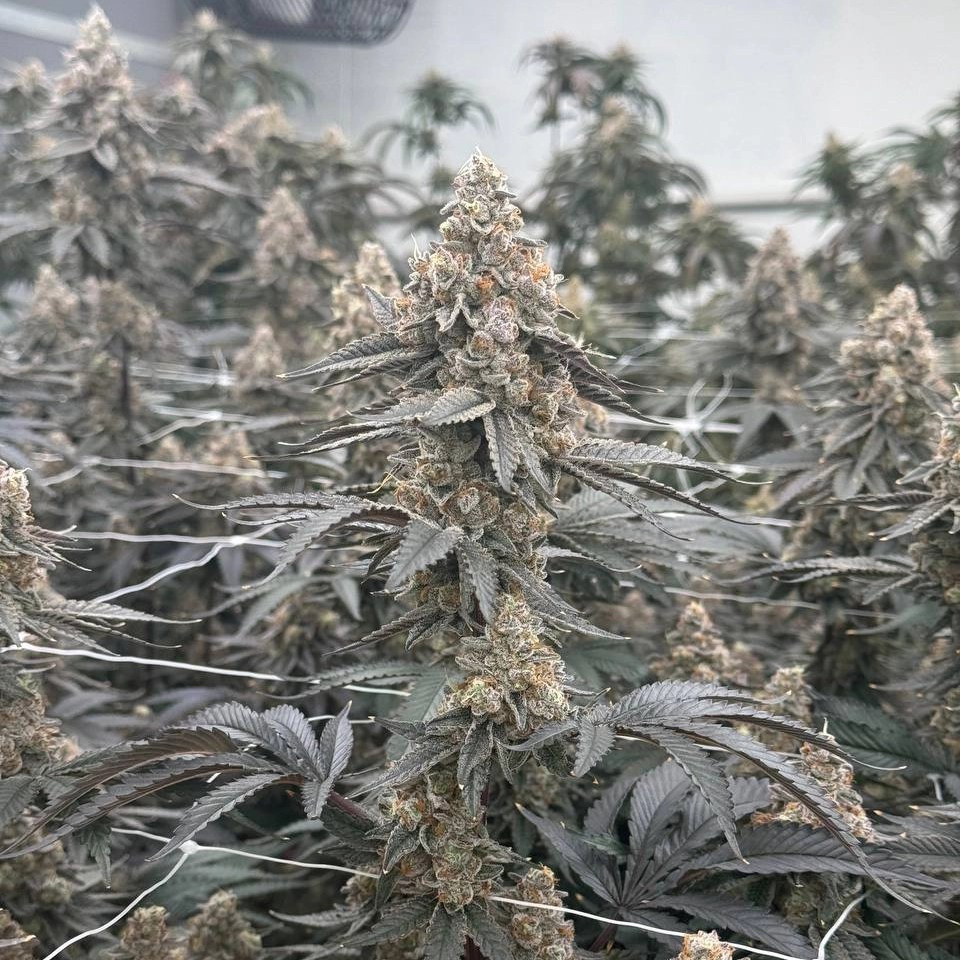
Snowman Cookies earns its wintery name without relying on a sugary dessert profile. Mature flowers can appear almost powdered in resin, with a heavy layer of trichomes surrounding olive-green calyxes and vivid orange pistils. Yet the aroma underneath that frosted exterior is distinctly earthy: toasted nuts, pine, herbs, wood, peppery spice, and pungent Kush rather than the candy sweetness common among newer Cookies hybrids.
Equally important, this cultivar should not be confused with Snowman, the famous Cookies-family GSC phenotype used in strains such as Cereal Milk and Gary Payton. Snowman Cookies is separately documented as a three-way Bubba Kush, Fire OG, and Girl Scout Cookies hybrid with a considerably more indica-oriented personality.
Genetics and Lineage
The accepted lineage combines Bubba Kush, Fire OG, and Girl Scout Cookies, three influential California-style cannabis families with complementary traits. Bubba Kush supplies the darkest portion of the pedigree, bringing compact growth tendencies, earthy coffee-and-spice character, and deeply relaxing body effects. Fire OG adds a sharper Kush expression built around fuel, pine, citrus, and potency. GSC contributes dense resin production, sweet-herbal complexity, and the cerebral lift that prevents the finished hybrid from functioning as an entirely one-dimensional nighttime indica. Multiple independent strain records consistently identify these three cultivars as the genetic foundation.
What cannot be verified with the same confidence is the original breeder. No dependable first-party breeder catalog or archived breeder release could be located that claims authorship of Snowman Cookies, and commercial listings have circulated without a consistent creator attached. That uncertainty is important because a different cultivar called Snowman is associated with Cookies and Powerzzzup genetics. The two names are sometimes blended online, but they refer to different genetic descriptions: Snowman is generally treated as a GSC phenotype, whereas Snowman Cookies is the Bubba Kush × Fire OG × GSC hybrid covered here.
Effects and Experience
The first portion of the high can seem almost contradictory to the plant’s heavy indica background. Cerebral euphoria tends to arrive quickly, brightening mood and giving thoughts a lighter, more detached quality. Some consumers experience increased sociability or a brief creative streak before the physical side gathers strength. Rather than producing the sharp mental acceleration of a true energetic sativa, the head effect generally feels buoyant and peaceful, with enough stimulation to remain engaged in music, movies, conversation, or low-pressure hobbies.
Body relaxation follows closely behind. Tingling may spread through the shoulders and limbs as muscular tension eases and movement begins to feel less urgent. With moderate consumption, the contrast between an elevated mind and settled body can be particularly enjoyable. Higher doses shift the balance toward heaviness, hunger, drowsiness, and mild couch-lock. Reported THC levels frequently reach the mid-to-upper 20% range, so inexperienced weed consumers should approach it conservatively. Excessive intake may bring dry mouth, dry eyes, dizziness, paranoia, or uncomfortable sedation rather than stronger relaxation.
Medical Benefits
The progression from mental uplift into physical calm helps explain why some medical marijuana consumers choose this cultivar later in the day. The initial change in mood may temporarily make stress, mental fatigue, or low spirits feel less intrusive, while the subsequent body effect can provide a sense of relief from muscular tension and everyday physical discomfort. Appetite often increases as the experience develops, another reason some patients may find the strain useful when eating has become difficult.
A heavier serving may become sufficiently relaxing for consumers who prefer cannabis shortly before sleep, although responses vary widely. Snowman Cookies itself has not been established through controlled clinical trials as a treatment for insomnia, depression, chronic pain, nausea, or appetite disorders. High-THC marijuana can also aggravate anxiety in susceptible individuals. Medical use is therefore better guided by actual cannabinoid testing, dosage, personal response, and healthcare advice than by the strain name alone.
Flavor Profile and Aroma
Snowman Cookies moves away from the fruit-and-candy direction that dominates many contemporary cannabis menus. Breaking apart the flower releases spicy herbs, dry wood, pungent earth, toasted nuts, and pine, followed by the heavier smell of Kush and resin. Some specimens carry a slightly sweet undertone, but sweetness rarely takes control of the profile. Instead, the appeal lies in the contrast between fresh forest-like notes and a warmer mixture of spice, herbs, nuts, and dank earth.
Reported terpene data is unusually diverse. Pinene, bisabolol, myrcene, caryophyllene, carene, and camphene have all appeared in profiles attributed to the cultivar. Pinene complements the obvious pine and herbal notes; myrcene reinforces earthiness; caryophyllene contributes peppery spice; and bisabolol can introduce softer floral, nutty nuances. On the palate, pine and spice often appear first before turning toward nuts, herbs, wood, and a lingering earthy finish. As with any marijuana strain, the precise aromatic balance depends heavily on phenotype, growing environment, harvest maturity, drying, curing, and storage.
Growing Information
Snowman Cookies is a photoperiod cannabis plant with a manageable indoor flowering period of roughly 53–64 days, placing most harvests around the eight-to-nine-week mark. Reported indoor plants generally remain between approximately 30 and 60 inches, while outdoor specimens can become considerably taller. Production around 400 g/m² indoors has been documented, with outdoor harvest estimates commonly falling near 400–500 grams per established plant under favorable conditions. Those numbers should be treated as practical ranges rather than guarantees because no verified original breeder specification exists.
Indoors, early topping and low-stress training can broaden the canopy before the plant begins concentrating energy into dense colas. Removing weak interior growth improves light distribution, while selective defoliation helps air move through areas where tightly packed flowers could otherwise retain moisture. A moderate nutrient program is preferable to assuming a high-THC Kush hybrid needs aggressive feeding. Maintaining stable root-zone conditions and watching leaf tips for nutrient stress usually provides a better path toward resin quality.
Outdoor cultivation works best with substantial sunlight and enough autumn dryness to finish dense buds safely. Strong airflow becomes particularly important late in the season, when resinous flowers and cooler nights can increase mold risk. Harvest timing varies by location but generally falls during October in the Northern Hemisphere. After cutting, a slow controlled dry followed by several weeks of curing allows the nutty, woody, pine-heavy terpene character to emerge more clearly instead of collapsing into generic grass or harsh earth.
FAQ
Is Snowman Cookies indica or sativa?
Snowman Cookies is generally classified as an indica-dominant hybrid, often described around 80% indica and 20% sativa. Its effects are not purely sedating, however. Cerebral euphoria usually appears first before stronger body relaxation develops.
What strains make Snowman Cookies?
The most consistently documented genetics are Bubba Kush × Fire OG × Girl Scout Cookies. These parents combine old-school Kush relaxation and earthiness with Fire OG potency and the resin production and cerebral qualities associated with GSC.
Is Snowman Cookies the same as Snowman?
No. This is an important distinction. Snowman is widely recognized as a separate Cookies-family GSC phenotype and appears in the lineage of cultivars such as Cereal Milk. Snowman Cookies is separately documented as a Bubba Kush, Fire OG, and GSC hybrid.
How strong is Snowman Cookies?
It belongs firmly in the high-potency category. Reported examples commonly reach about 23–28% THC, with some references placing particularly strong batches near 30%. Low-tolerance consumers should begin with a small amount because its physical heaviness can build considerably after the initial euphoric stage.
What does Snowman Cookies taste like?
Expect a savory profile dominated by pine, nutty herbs, spice, earth, and wood, backed by pungent Kush. It is considerably less candy-forward than many modern Cookies cultivars, making it appealing to consumers who prefer herbal and earthy weed flavors.
Final Thoughts on Snowman Cookies
Snowman Cookies brings together three influential genetic families without losing the darker character of its Kush ancestry. Bubba Kush supplies depth and physical calm, Fire OG adds potency and resinous pine, while GSC provides enough cerebral energy to create a more layered experience. The result starts brighter than its indica dominance suggests before settling into a heavier, appetite-friendly body relaxation.
Its biggest point of confusion is also easy to resolve: Snowman Cookies and Snowman are not interchangeable names. Viewed as its own Bubba Kush × Fire OG × GSC hybrid, this cultivar makes much more sense. For marijuana consumers who favor frosted flowers, strong THC, nutty herbs, pine, spice, earth, and an increasingly relaxing evening high, Snowman Cookies offers a notably old-school interpretation of the broader Cookies style.