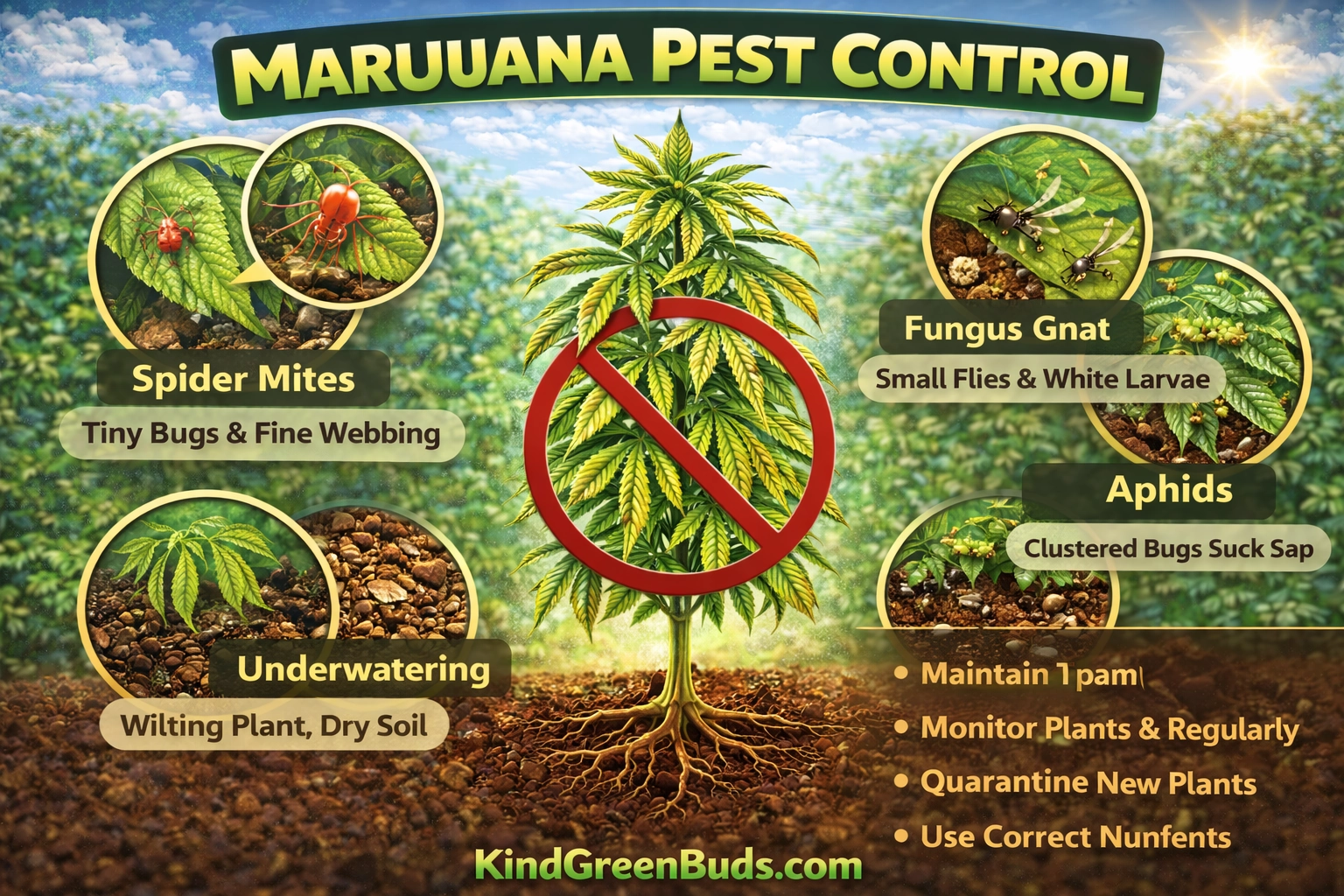
Spider mites are among the most destructive pests in cannabis cultivation, not because they are large or immediately obvious, but because they are small, persistent, and reproduce at an alarming rate. These microscopic arachnids feed by piercing plant cells and extracting their contents, slowly draining the plant’s ability to photosynthesize and grow properly. A minor infestation can escalate into a serious outbreak within days under favorable conditions.
Many growers do not realize they have spider mites until visible damage appears, and by that point the population may already be well established. The key to protecting your plants is early detection, correct identification, and a strategic response tailored to the plant’s growth stage.
What Spider Mites Look Like
Spider mites are extremely small, often barely visible without magnification. They may appear red, brown, tan, or translucent depending on species and maturity. Because of their size, most growers first notice the damage rather than the pest itself. The earliest visible sign is typically fine white or yellow speckling across the surface of leaves. This stippling pattern occurs because each feeding site represents a punctured cell where chlorophyll has been removed.
As feeding intensifies, leaves begin to lose color, becoming pale or dull. In more advanced infestations, fine webbing develops on the undersides of leaves or between branches. This webbing protects the mites and signals that the colony has expanded significantly. Once webbing is visible, immediate intervention is critical to prevent severe plant decline.
How Spider Mites Damage Cannabis Plants
Spider mites damage cannabis by directly reducing the plant’s photosynthetic capacity. When they puncture leaf cells and extract contents, they disrupt chlorophyll production and cellular function. Over time, heavily affected leaves become yellowed, brittle, and may drop prematurely. This reduces the plant’s energy production and weakens overall growth.
In vegetative stages, infestations can stunt development and reduce canopy density. During flowering, the consequences are more severe. Spider mites can migrate into buds, weaving webs inside colas and contaminating flowers. Infested buds not only lose potency but may also become unsuitable for consumption. Yield loss can be substantial if populations are allowed to expand unchecked.
Conditions That Encourage Spider Mite Infestations
Spider mites thrive in warm, dry environments. Temperatures above 75°F combined with humidity levels below 40% create ideal breeding conditions. Indoor grow rooms are especially vulnerable if airflow is insufficient or humidity is consistently low. Outdoor grows often experience outbreaks during hot, dry seasons when natural predators are less active.
Spider mites frequently enter grow spaces unintentionally. They can hitchhike on clothing, pets, tools, or newly introduced plants. Once inside, they reproduce rapidly. A single female can lay dozens of eggs, and populations can double in just a few days under optimal conditions. Maintaining environmental balance is one of the most effective preventive measures against infestation.
Confirming a Spider Mite Problem
To confirm spider mites, inspect the underside of affected leaves carefully. Using a magnifying glass makes detection easier. You may see tiny moving dots clustered near veins. Another method involves gently tapping a leaf over a sheet of white paper; dislodged mites will appear as moving specks.
It is important not to confuse spider mite damage with nutrient deficiencies or fungal infections. The speckled feeding pattern is distinct and often accompanied by webbing in later stages. Correct diagnosis ensures appropriate treatment and prevents unnecessary nutrient adjustments.
Treating Spider Mites During Vegetative Growth
During vegetative growth, treatment options are more flexible because there are no flowers to contaminate. Neem oil, insecticidal soap, and horticultural oils are commonly used treatments. However, thorough coverage is essential. Mites hide along veins and leaf undersides, so superficial spraying is ineffective.
Applications should be repeated every three to five days to interrupt the reproductive cycle. Spider mites lay eggs that may survive initial treatments, so consistency is critical. Simply spraying once rarely eliminates the population.
Biological controls such as predatory mites can also be highly effective. These beneficial organisms feed on spider mites and can help establish long-term balance in the grow environment. Increasing humidity slightly and improving airflow also reduce reproduction rates.
Managing Spider Mites During Flowering
Flowering presents a greater challenge because spraying buds can compromise taste, safety, and overall quality. Heavy oil-based treatments should generally be avoided once buds form. Instead, growers often rely on biological controls such as predatory mites or manual removal of heavily infested leaves.
Improving airflow and maintaining balanced humidity—without creating conditions conducive to mold—is critical during flowering. If infestation is discovered late in bloom and is severe, options become limited. This highlights the importance of early detection before flowering begins.
Preventing Spider Mites
Prevention requires routine inspection and environmental discipline. Regularly check leaf undersides, especially during warm periods. Maintain humidity levels around 50–60% during vegetative growth to discourage rapid reproduction. Ensure strong, consistent airflow throughout the canopy to prevent stagnant microclimates.
Quarantine new plants before introducing them into your grow space. Clean tools and avoid wearing outdoor clothing directly into the grow room. Sticky traps, while not effective at eliminating spider mites, can help detect general pest presence early. A proactive approach dramatically reduces the risk of infestation.
Final Thoughts
Spider mites are small but capable of causing significant damage to cannabis plants in a short amount of time. Their feeding reduces photosynthesis, weakens plant vigor, and can contaminate flowers during bloom. Because they reproduce quickly in warm, dry environments, early detection is critical.
Successful management depends on careful inspection, environmental control, and stage-appropriate treatment. By maintaining stable humidity, strong airflow, and clean grow practices, you minimize the conditions that allow spider mites to thrive. When addressed promptly and strategically, even infestations can be brought under control without sacrificing yield or quality.