Carbon dioxide (CO₂) extraction is one of the most widely used methods for producing clean, high-quality cannabis concentrates. Known for its precision and solvent-free reputation, CO₂ extraction uses pressurized carbon dioxide to separate cannabinoids and terpenes from plant material. It has become especially popular in regulated markets because of its safety profile, scalability, and ability to produce consistent results.
Unlike hydrocarbon extraction methods that rely on butane or propane, CO₂ extraction uses a naturally occurring gas that leaves no toxic residue when properly processed. This makes it a preferred option for manufacturers producing vape oils, tinctures, capsules, and edible infusions.
How CO₂ Extraction Works
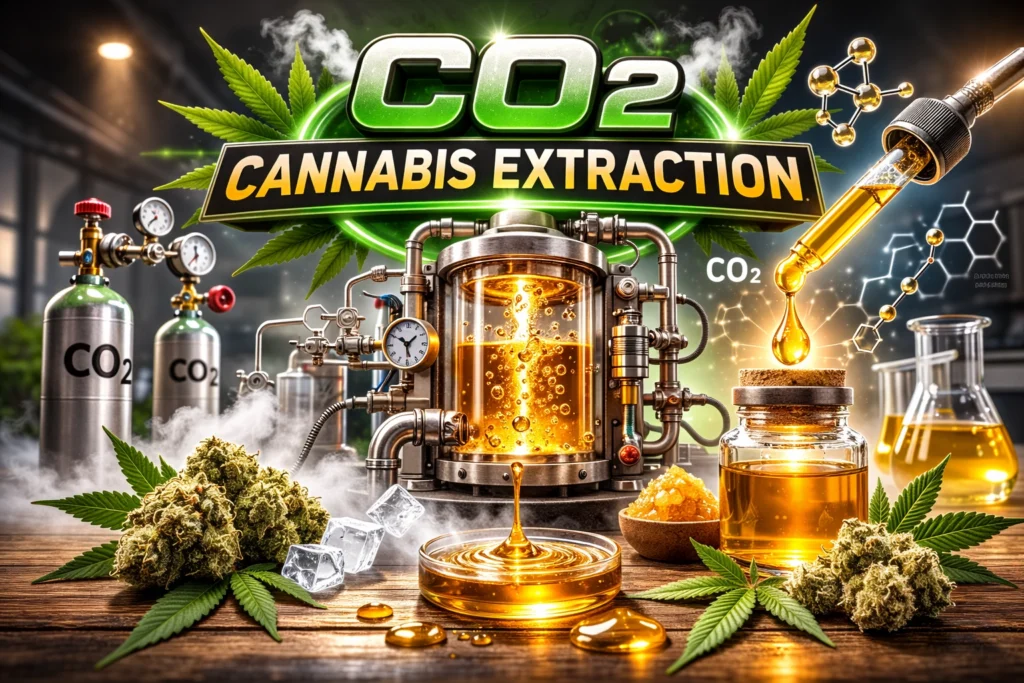
CO₂ extraction relies on manipulating temperature and pressure to change carbon dioxide into a special state of matter known as supercritical CO₂. In this state, CO₂ behaves both like a gas and a liquid at the same time. It can diffuse through plant material like a gas while dissolving compounds like a liquid.
The process begins by placing dried cannabis flower or trim into an extraction vessel. Carbon dioxide is then pressurized and heated until it reaches its supercritical state. Once supercritical, the CO₂ is pumped through the plant material, where it dissolves cannabinoids, terpenes, and other oil-soluble compounds.
The CO₂ carrying these compounds moves into a separator chamber. By lowering the pressure and temperature, the CO₂ returns to its gaseous state and separates from the extracted oil. The gas can then be recycled back into the system, making the process efficient and environmentally friendly.
Supercritical vs. Subcritical CO₂
There are two main variations of CO₂ extraction: supercritical and subcritical.
Supercritical extraction uses higher temperatures and pressures. This approach is highly efficient and typically extracts a broader range of cannabinoids and plant compounds. It is commonly used for large-scale commercial production.
Subcritical extraction operates at lower temperatures and pressures. While it may produce lower yields, it can better preserve delicate terpenes. Some producers combine both methods in stages to optimize potency and flavor.
Refinement and Post-Processing
After extraction, the crude oil often undergoes further refinement. This may include winterization, where the oil is mixed with ethanol and chilled to remove unwanted fats and waxes. Filtration and evaporation follow to purify the extract.
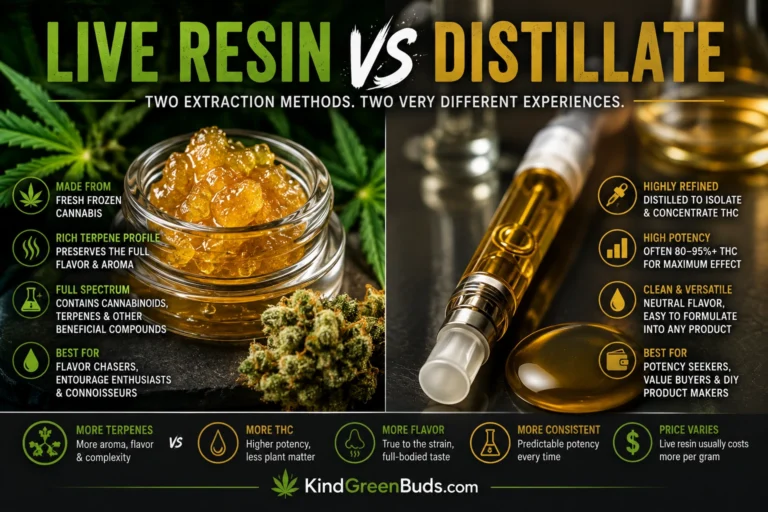
Some products are then distilled to create highly concentrated THC or CBD oils, while others are formulated into full-spectrum extracts that retain a broader range of cannabinoids and terpenes.
The final product may appear as a thick amber oil, clear distillate, or refined concentrate ready for infusion into various cannabis products.
Why CO₂ Extraction Is Popular
CO₂ extraction has gained widespread adoption because it is considered clean and controllable. Carbon dioxide is non-flammable, inexpensive, and easy to remove from the final product. Since it leaves no residual solvent when properly processed, many consumers perceive CO₂ extracts as safer.
The method also allows operators to fine-tune temperature and pressure settings to selectively extract specific compounds. This precision makes it ideal for producing standardized medical and wellness products.
Additionally, CO₂ systems are closed-loop and recyclable, reducing environmental impact and long-term operating costs.
CO₂ vs. Other Extraction Methods
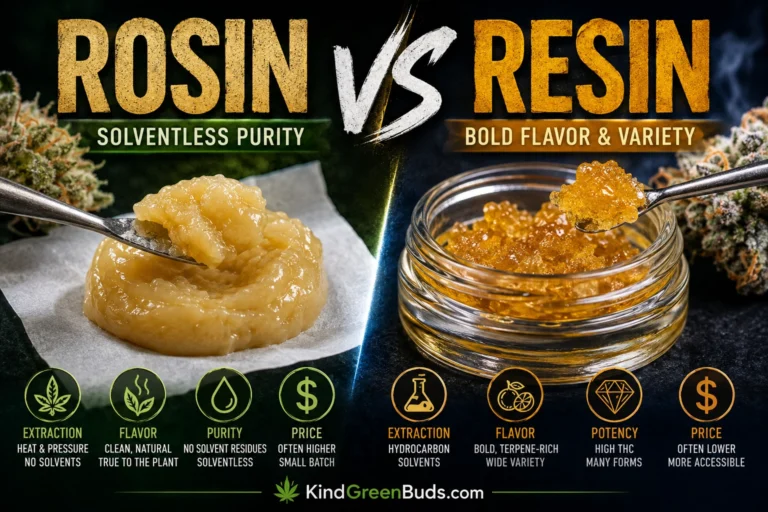
Compared to hydrocarbon extraction, CO₂ is often viewed as cleaner but sometimes less terpene-rich. Hydrocarbon methods may capture stronger flavor profiles, particularly in products like live resin.
Ethanol extraction is highly efficient and cost-effective for large-scale production, but it may pull more chlorophyll and require additional refinement.
Solventless methods such as rosin pressing avoid chemical solvents entirely but are generally less scalable and may produce lower yields.
Each extraction method has advantages, and the best choice depends on the desired final product.
Safety and Regulation
One of the biggest advantages of CO₂ extraction is safety. Carbon dioxide is non-flammable and widely used in the food and beverage industry. In regulated cannabis markets, CO₂ systems must still meet strict manufacturing standards, but they pose significantly less explosion risk compared to hydrocarbon solvents.
Because of this safety profile, CO₂ extraction is commonly used in licensed facilities producing medical cannabis products.
Final Thoughts
CO₂ cannabis extraction is a sophisticated and highly controlled method for producing clean, potent cannabis oils. By using pressurized carbon dioxide in its supercritical state, manufacturers can efficiently isolate cannabinoids and terpenes while minimizing residual solvent concerns.
Its balance of safety, scalability, and precision has made CO₂ extraction a cornerstone of the modern cannabis industry, particularly for products that require consistency and regulatory compliance.